|
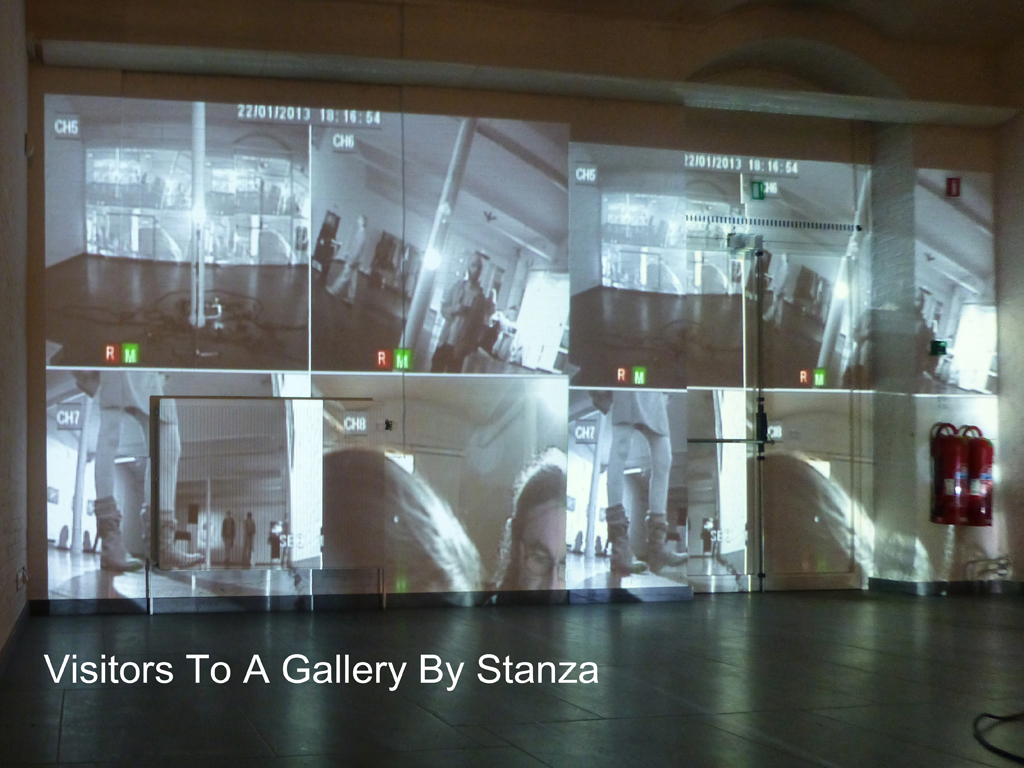
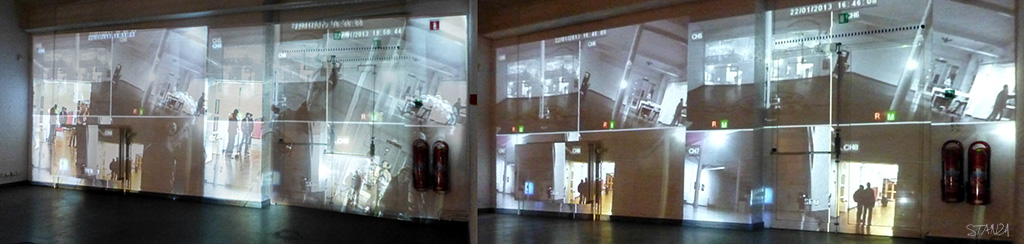
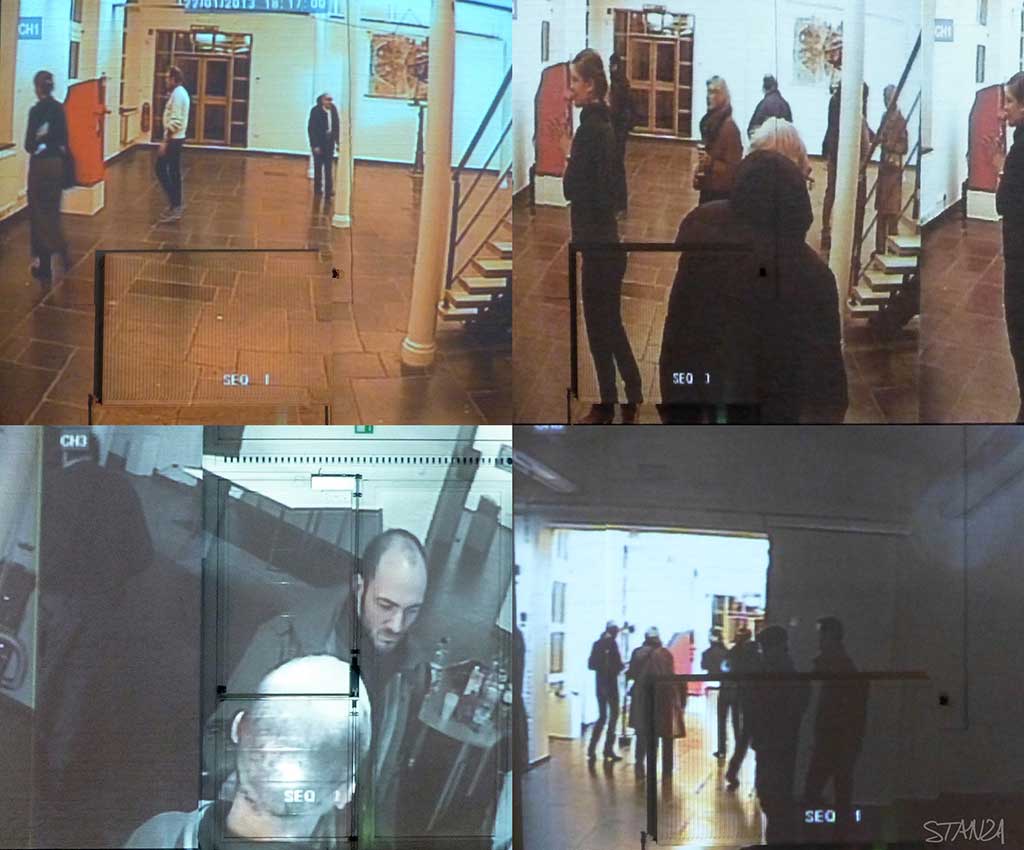
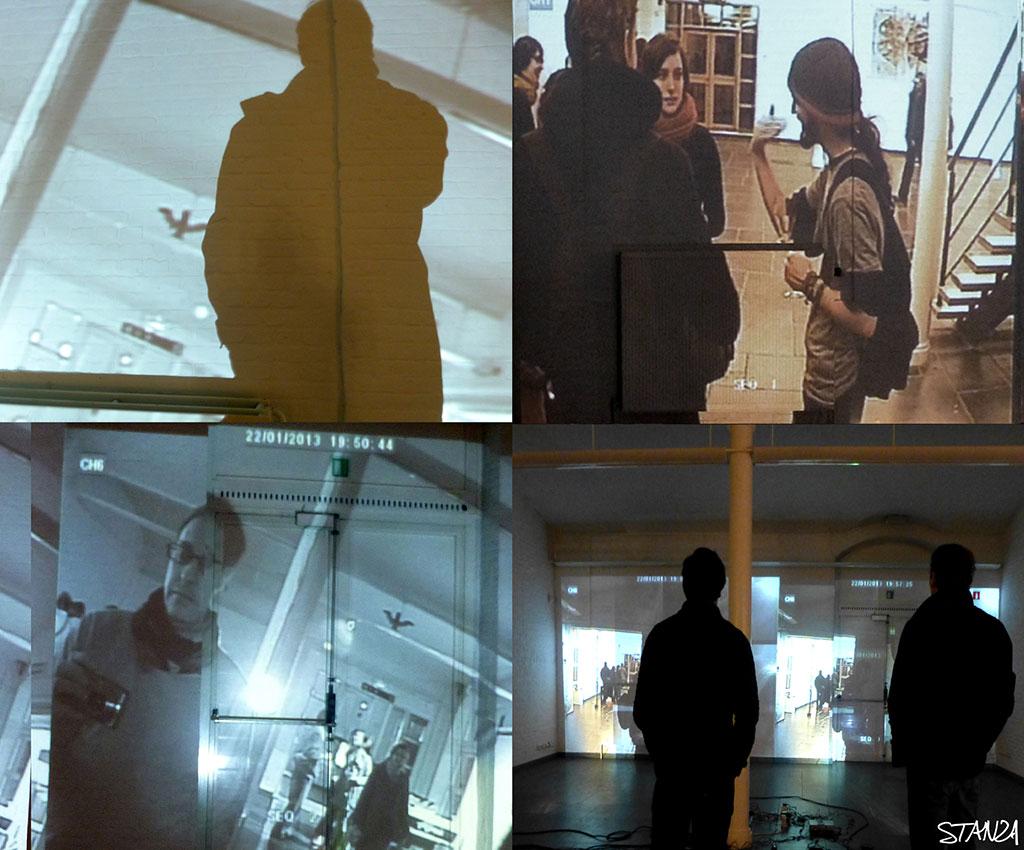
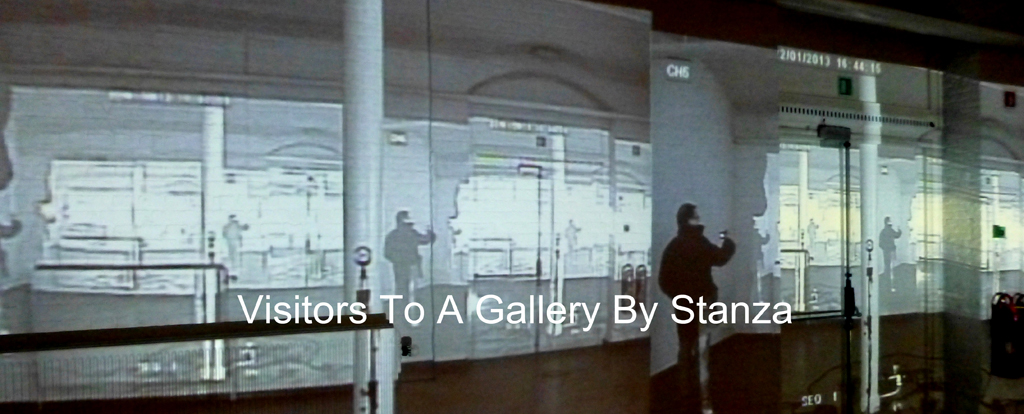
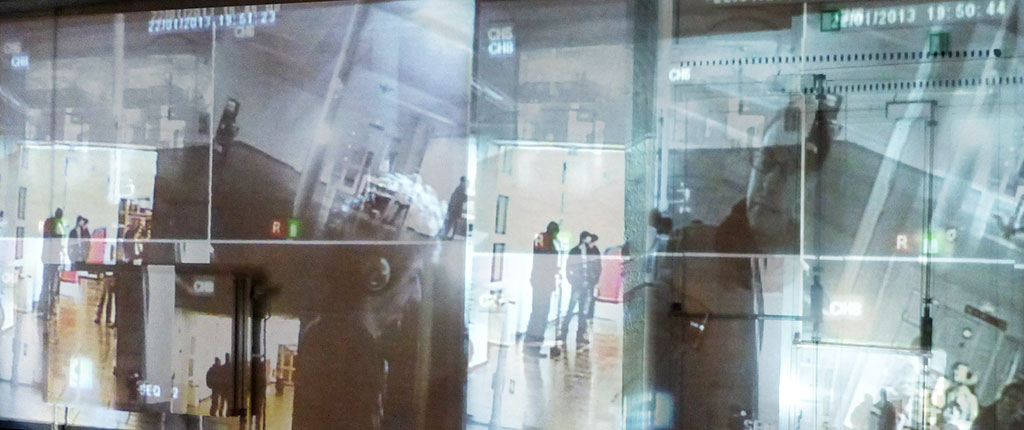
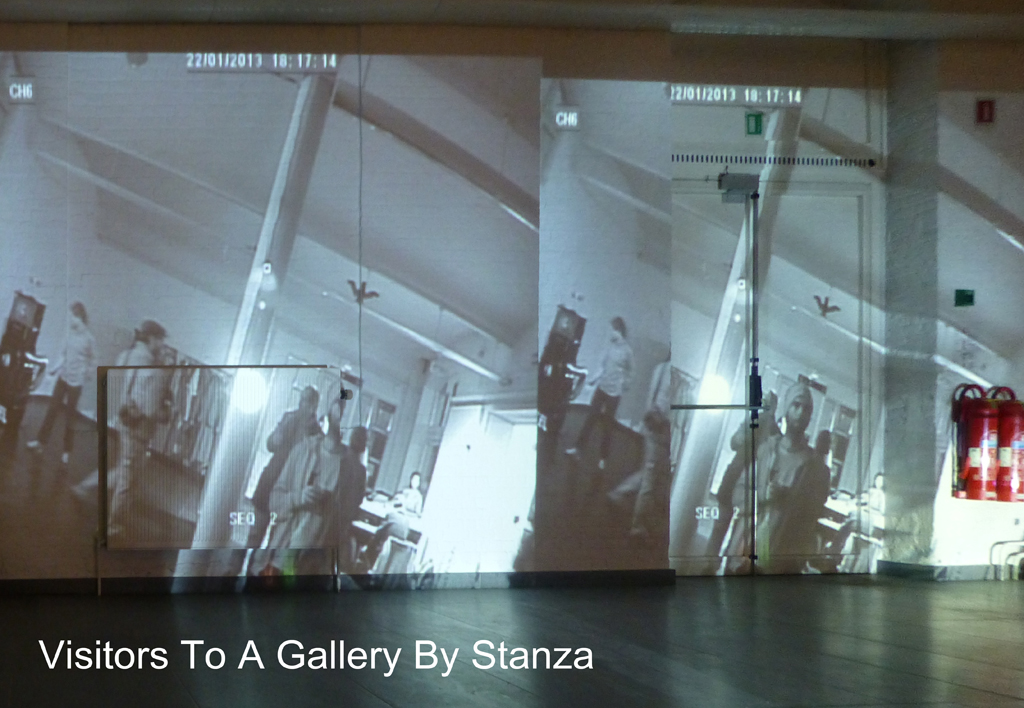
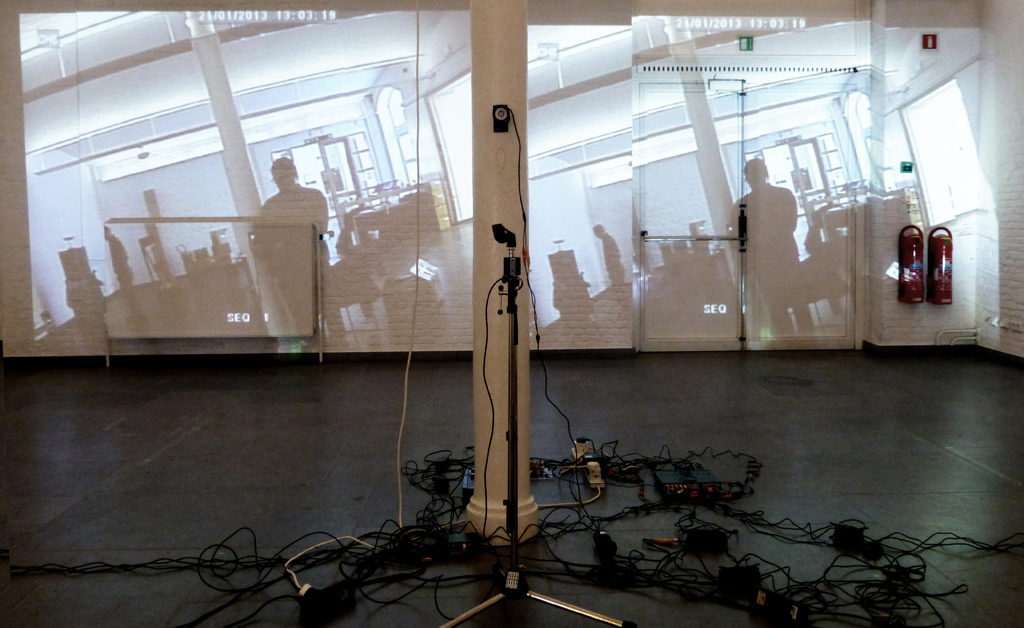
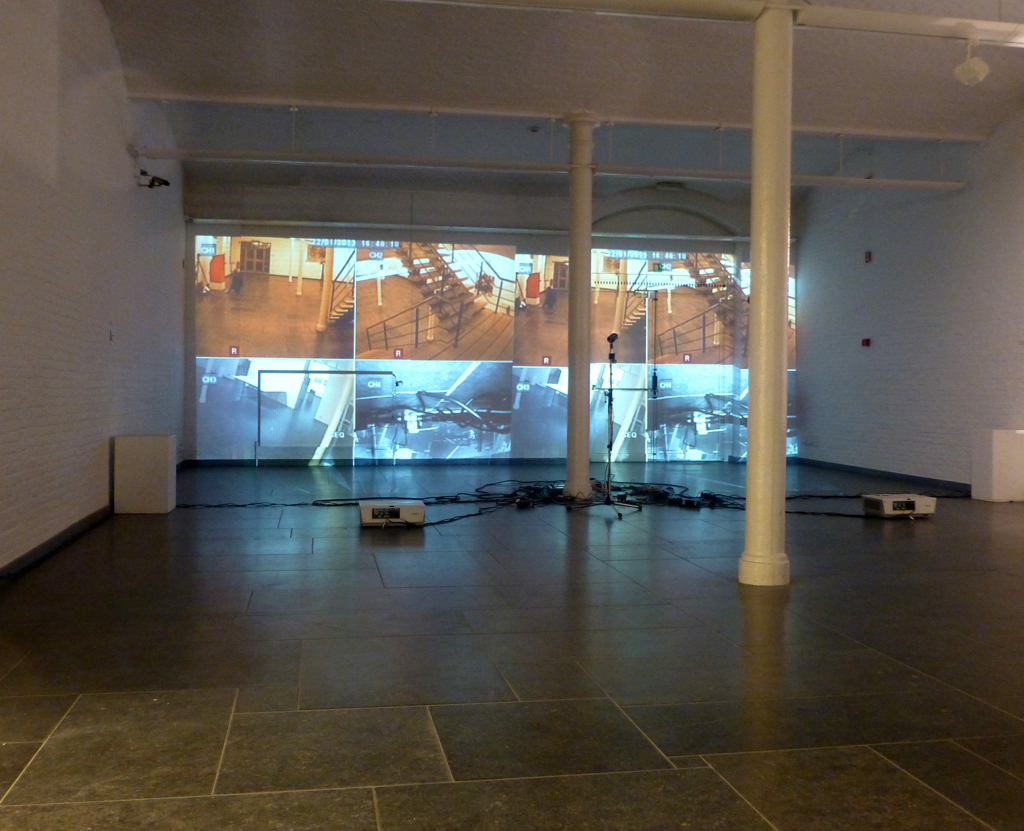
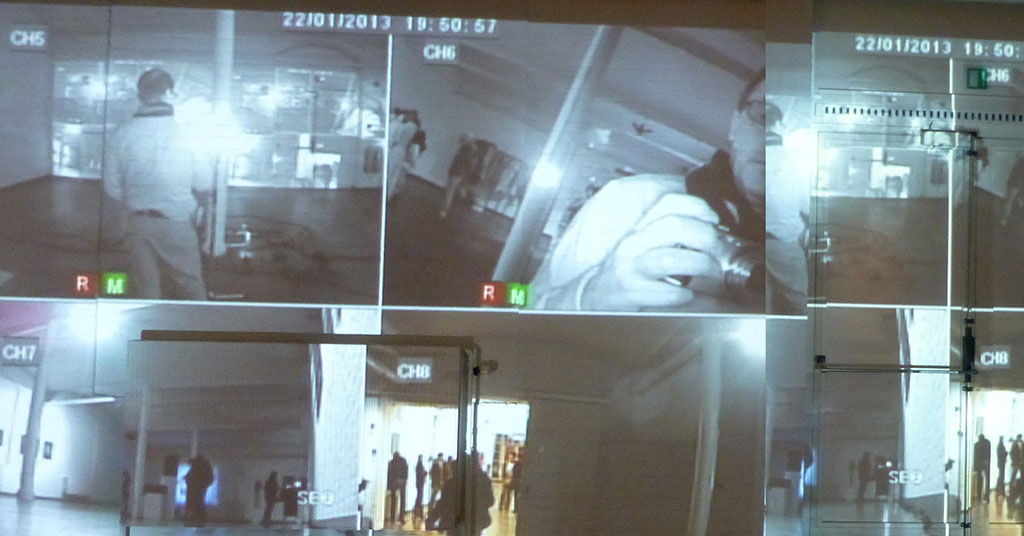
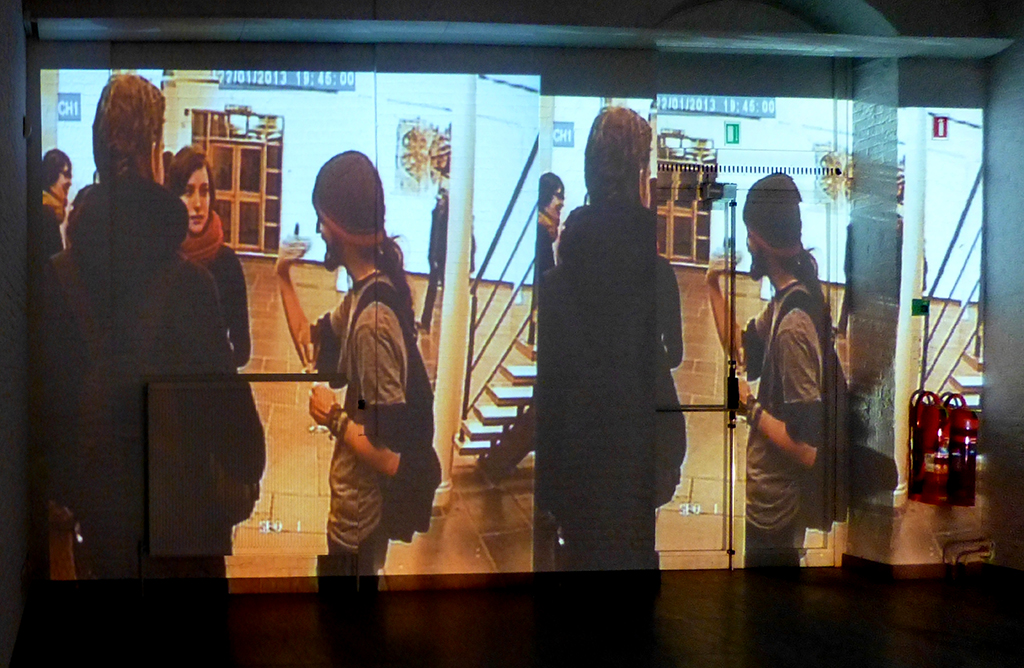
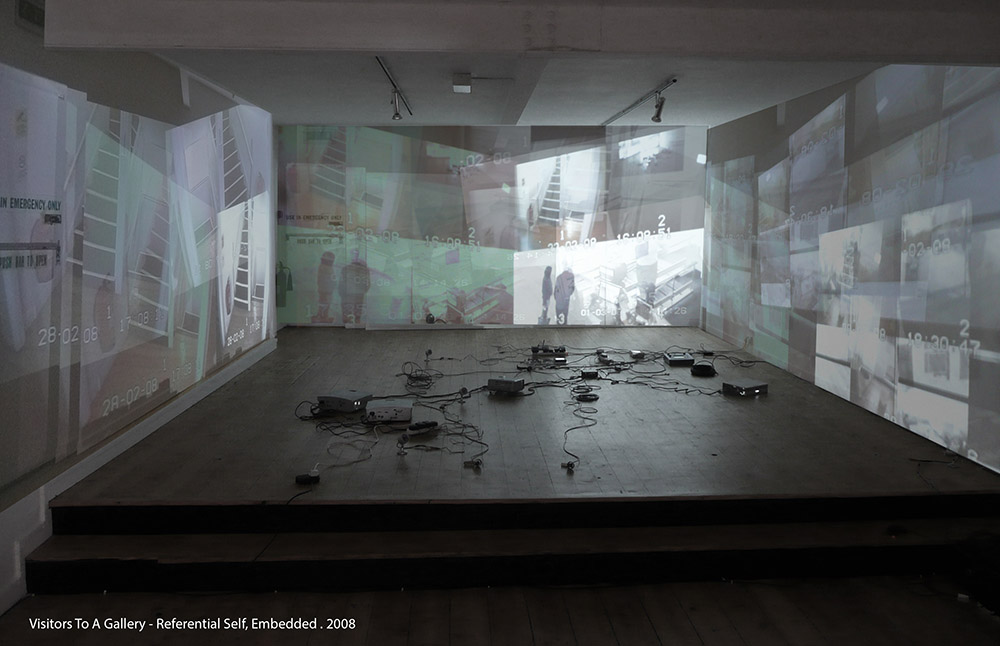
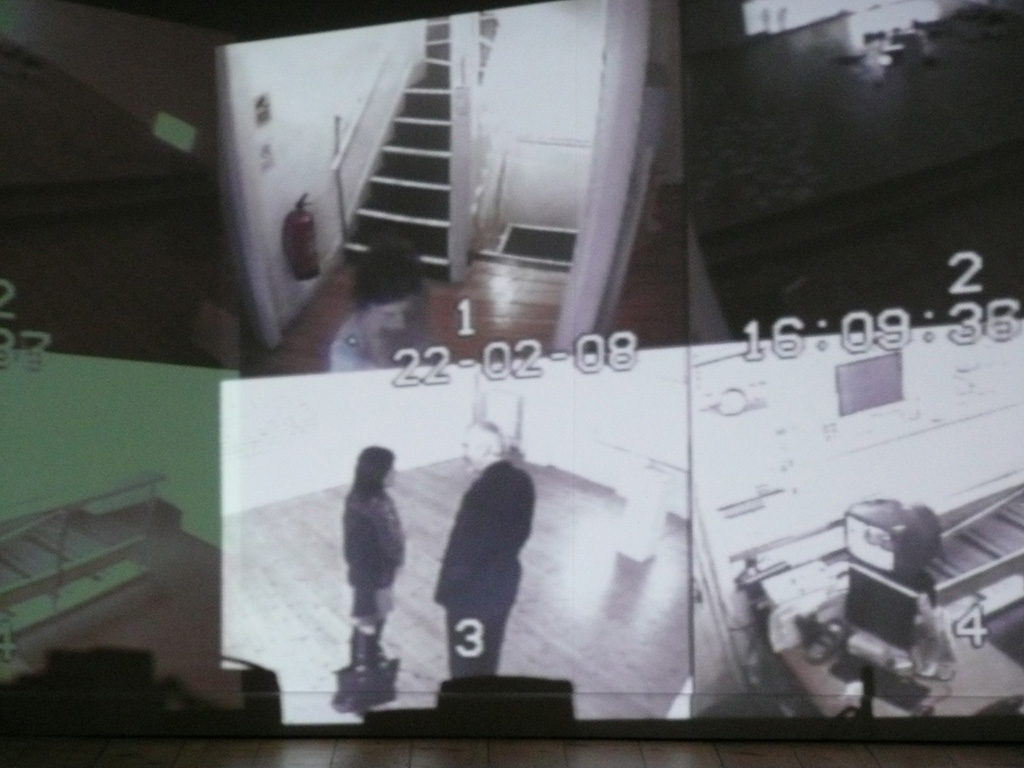
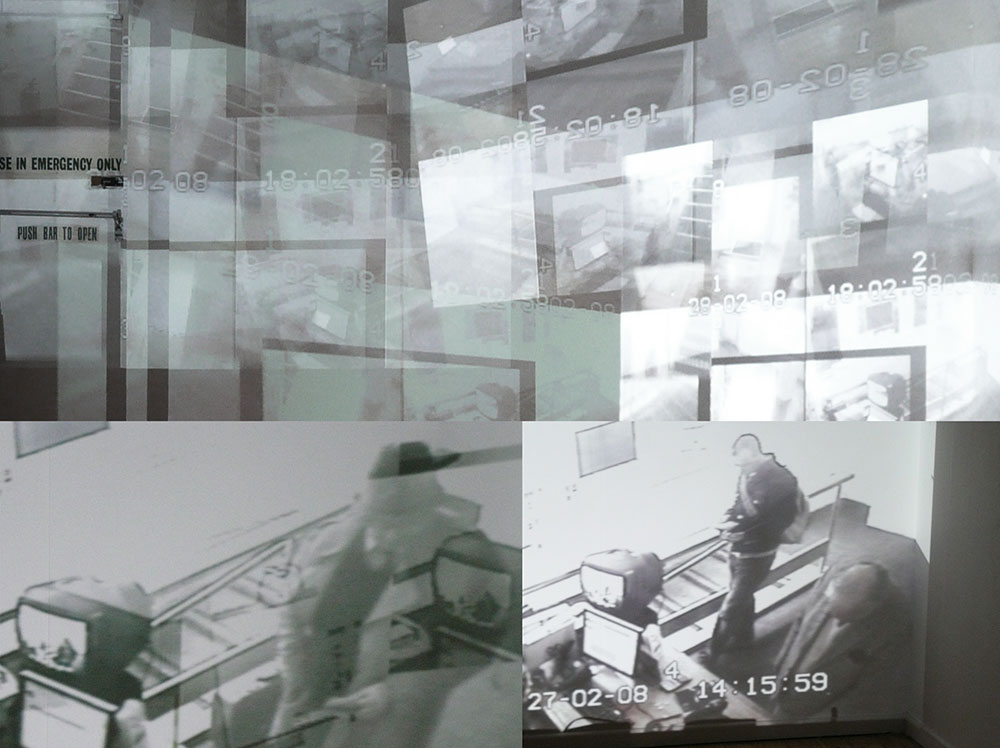
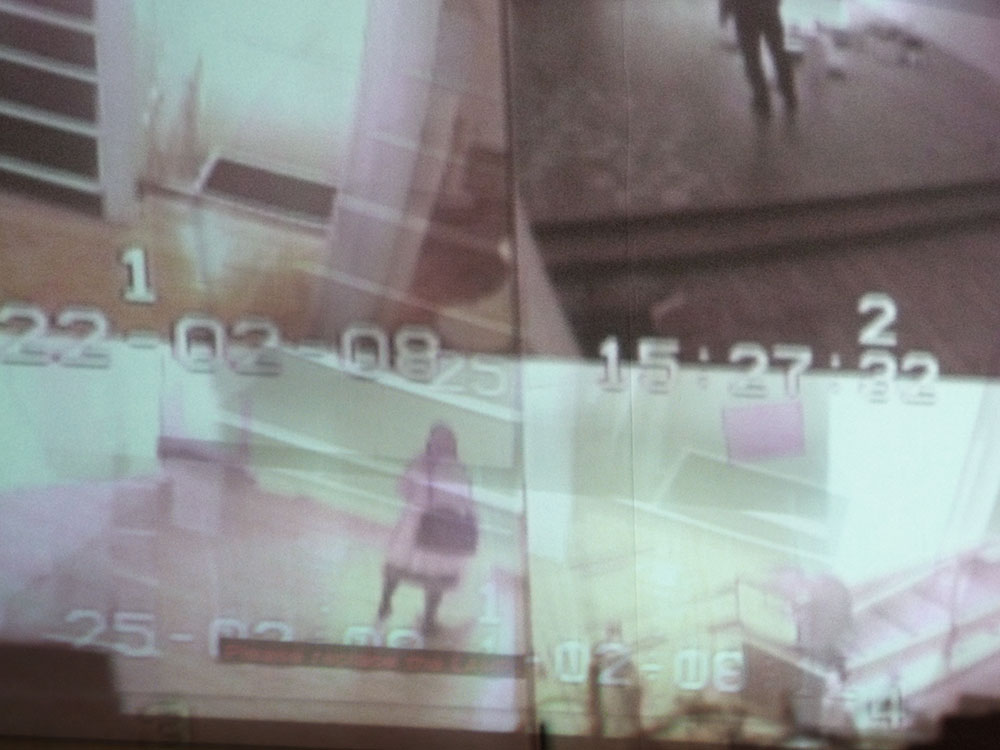
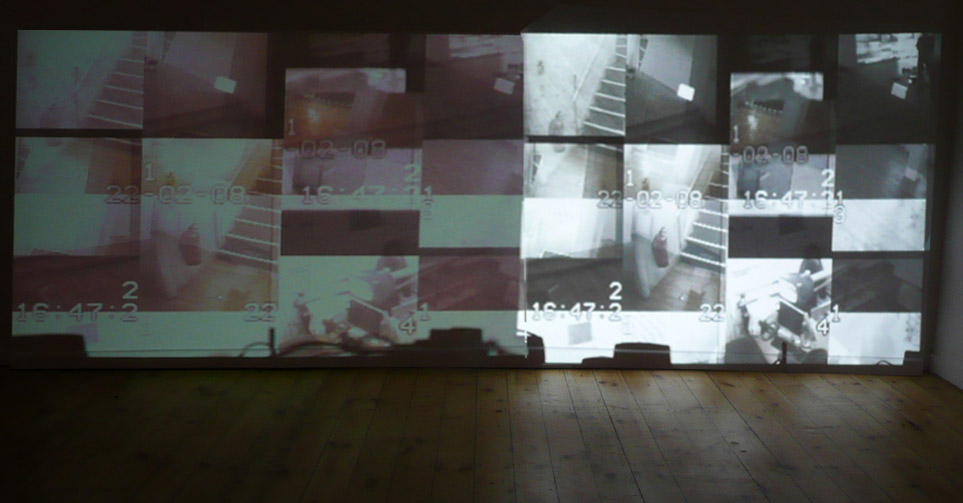
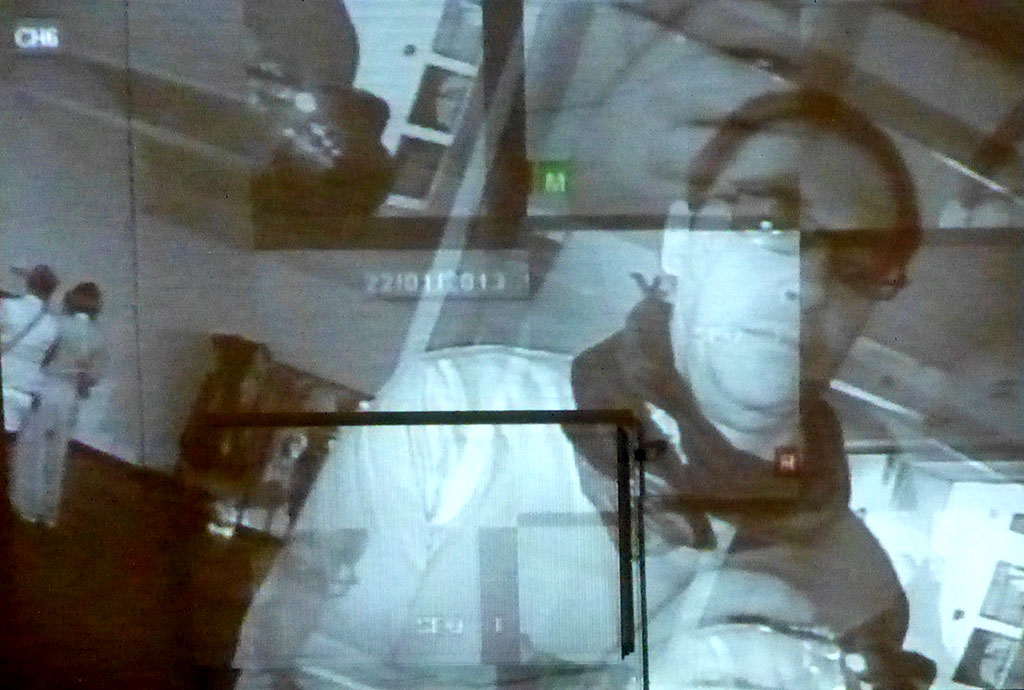
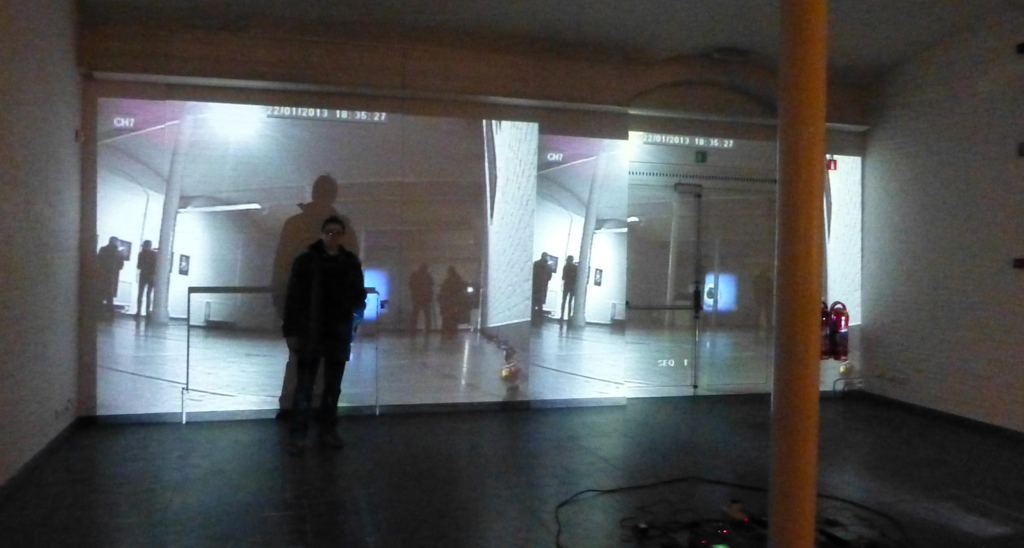
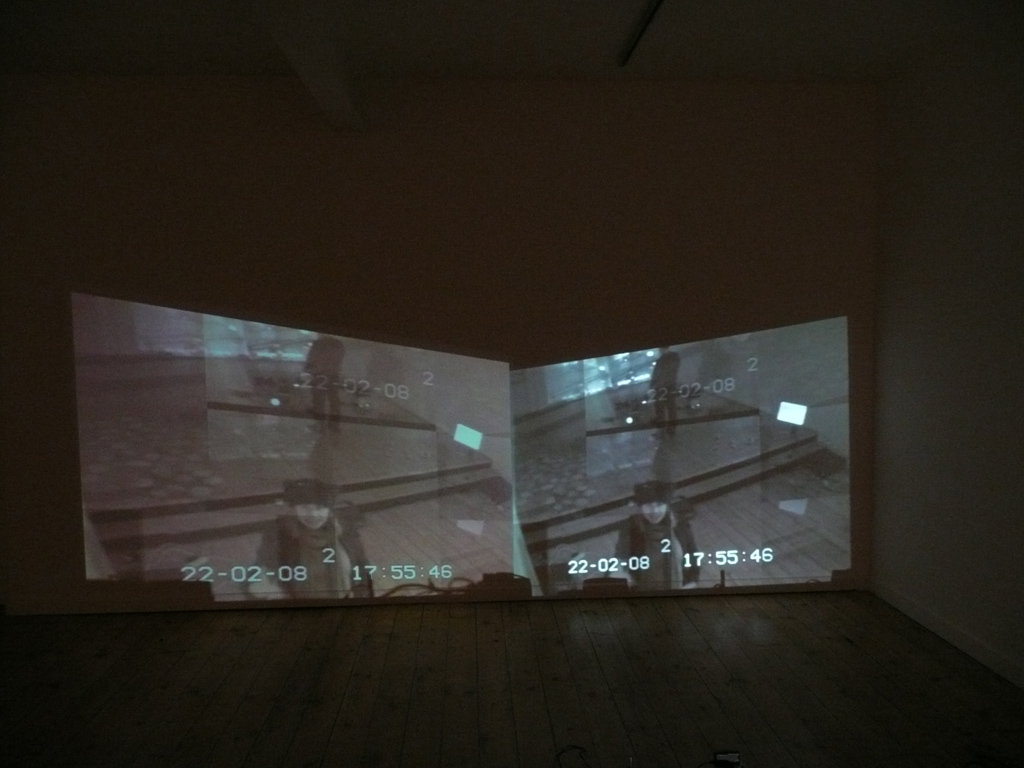
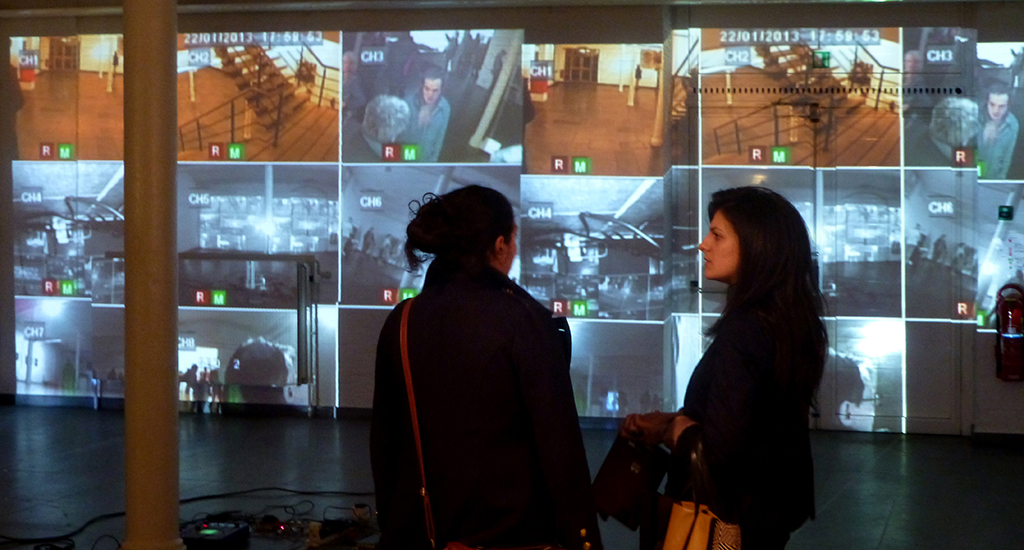
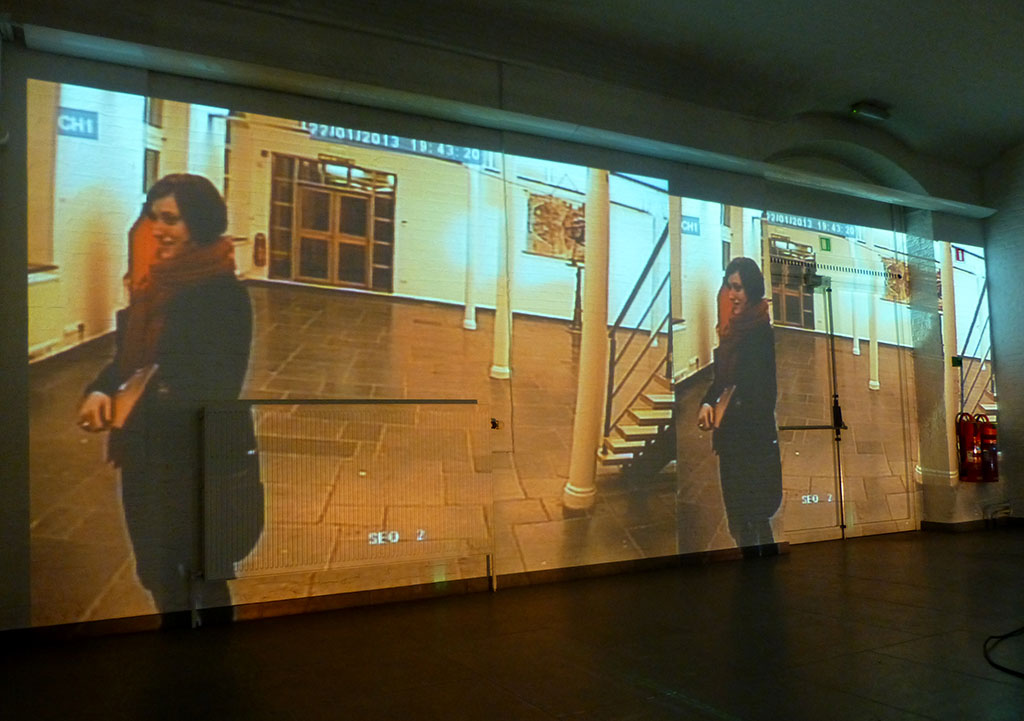
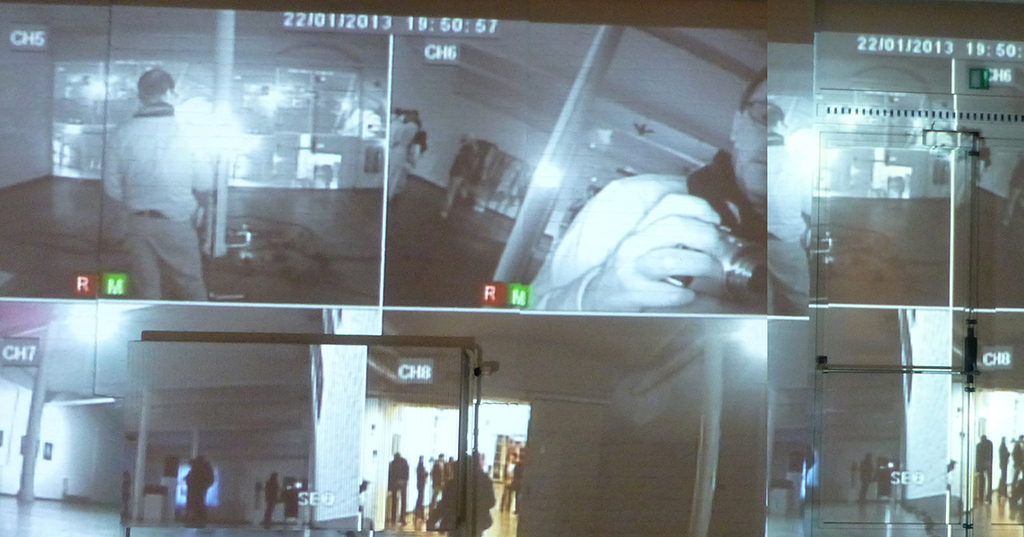
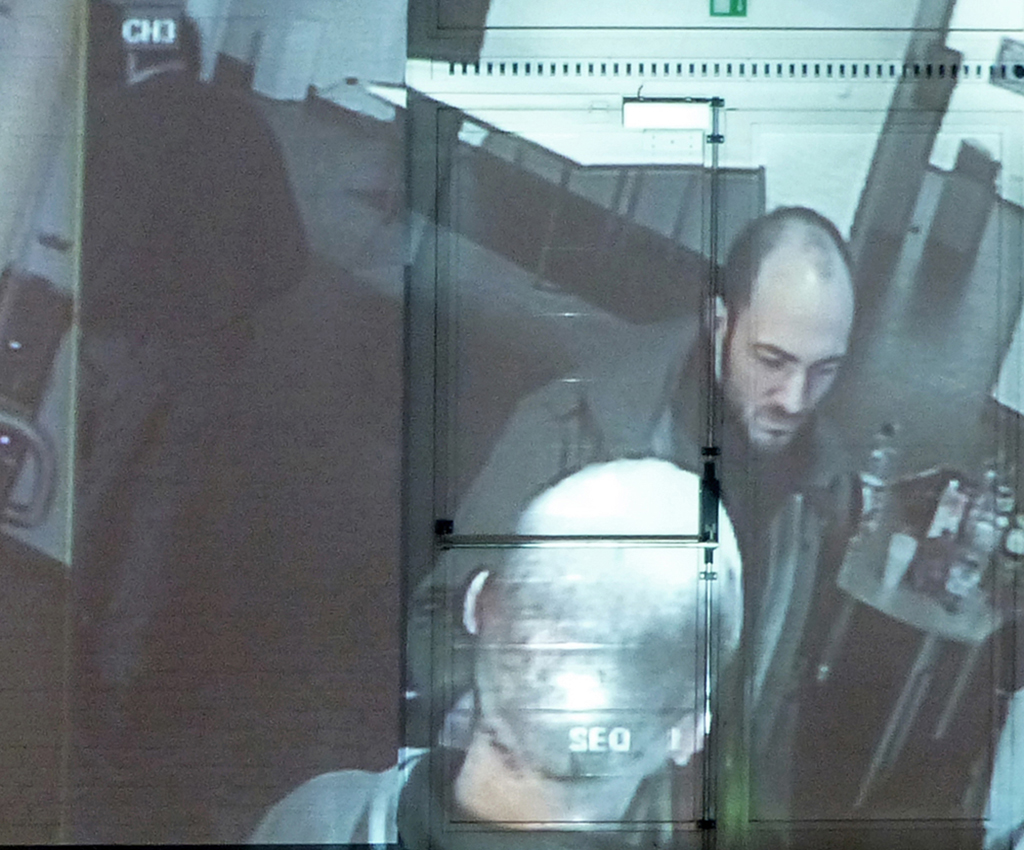
Title: Visitors To A Gallery - Referential Self, Embedded. 2004 + This digital artwork is a surveillance art system that incorporates the visitors to the gallery inside the artwork. As visitors come into the gallery, they are then monitored and captured by the camera system in the gallery. A series of codes and custom electronics manipulates the camera feeds and the resulting video feeds. Proximity sensors on the floor allow the system to zoom in, or divide the screen into grids, depending on where people are standing in the gallery. The results are displayed on the gallery walls. Concepts: The visitors to the gallery, are in fact assets, and I refer to the audience as data. The visitors, that is the audience are units of data, moving around the giant database, which is the gallery. The patterns, movement, and exchanges of data in the real space, can be measured and interpreted as an emergent social space or flow space.
Funding and Development. I first developed the artwork as part of a Clarks Bursary at the Watershed Media Centre in 2004, where it was first presented. Further development started again as part my AHRC fellowship at Goldsmiths College in 2006. It was re-commissioned by Helen Sloan in 2008 where it was shown at Plymouth Arts Centre UK 2008 curated by Paula Orrell (which was supported by The Arts Council Of England) . The installation was exhibited again in 2013 at De Markten Belgium as part of the exhibition "A Look Inside" which was a themed show in surveillance based artworks. Which was at the event to launch the book Liquid Surveillance. (Lyon Bauman) Exhibitions and Provenance. This installation has been exhibited in these galleries and venues.
Contexts: Visitors in any of the galleries and all spaces in the building can appear inside the artwork at any time. In this way I create a parallel universe what I call a parallel reality. The gallery becomes a panopticon, a surveillance space of the live breathing data with "The Visitors To A Gallery". Though I have indicated that visitors can be thought of units of data, it is also possible to “re-mediate” the body in the data space in order that a new, emergent, social space is created. New technologies will monitor the space to track public interactions and provide “interpretative” and the cluster of visitors within the gallery. "Visitors to a Gallery", uses custom made electronics and ultrasound sensors which are placed on the gallery floor to create the installation in the space. Visitors to the main gallery control the CCTV feeds by their own movement in the space. The artwork becomes a performative and interactive controlled system. The proximity to the main ultrasound sensors affects the aesthetic of the image. The visitors act as an intervention in the the gallery space and become embedded in the artwork. Technology: Live surveillance from the Gallery. Projectors, custom electronics system , software. Touring: This work is available for touring and for any public space wishing to expand on my concept of privacy in public spaces as artwork. There is also a larger research text here which was developed in 2008 and sent to Tate Modern to form an AHRC bid for follow on funding under the title Public Doman. Thanks to Plymouth Arts Centre, Paula Orrell. Supported by Helen Sloan of Scan. Part of distributed South, which is a project funded by The Arts Council England. Thanks to an AHRC creative fellowship and Goldsmiths digital studios. KEYWORDS: network art, CCTV, generative, sensor, installation, real time audio, visualization, environment, surveillance art, responsive. Concept, images, design, visualisation, installation, (c) copyright Stanza. 2004
FURTHER CONTEXT: Everything is or will be tracked. CCTV, car sensors, tracking inside our phones and id card movement tracking in the guise of anti- terror activity. The patterns we make, the forces we weave, are all being networked into retrievable data structures that can be re-imagined and sourced for information. These patterns all disclose new ways of seeing the world. The value of information will be a new currency as power change. The central issue that will develop will be the privilege and access to these data sources. By at least taking some of this data and making something with it one is at least reclaiming ownership of the data and putting it back in the public domain. Surveillance systems are everywhere in the public domain. We are all actors, bit part actors, in a giant movie called life. Except we cannot watch, it is not on public display and the results are monitored, filtered and distributed without our permission. This research is an opportunity to redress that balance. Underpinning these artworks and research, are a whole series of potential problems about observation, surveillance, and the ethics of the control space. Imagine walking out the door, and knowing every single action, movement, sound, micro movement, pulse, and thread of information is being tracked, monitored, stored, analyzed, interpreted and logged. Stanza often works with small unit blocks that are simplified then re built , re-cored re-formed into an understanding that can re-communicate the complexity of the larger system. Stanza is working towards creating a new social space that exists in between these independent online networks where future cities will be merged into real time connected up data cities. The landscape will become an observable connection of monitored networks of real time information flows. Stanza 2004 In Visitors to a Gallery, Referential Self, Embedded, the artist is therefore fully aware of the tendency for ubiquitous technologies to be those of surveillance and control. The audiences here are making their own damn art and have the freedom to make the content of the work itself, but because the CCTV cameras are capturing their image when they might not have been aware of it, they of course are not fully in control. The artwork Gallery, Invisible Agency and Cultural Behaviours from 2008 marks a more conceptual approach to a similar theme, and Stanza asks what happens during the process of visiting the gallery as a dataspace - what does the visitor actually do? Professor Beryl Graham
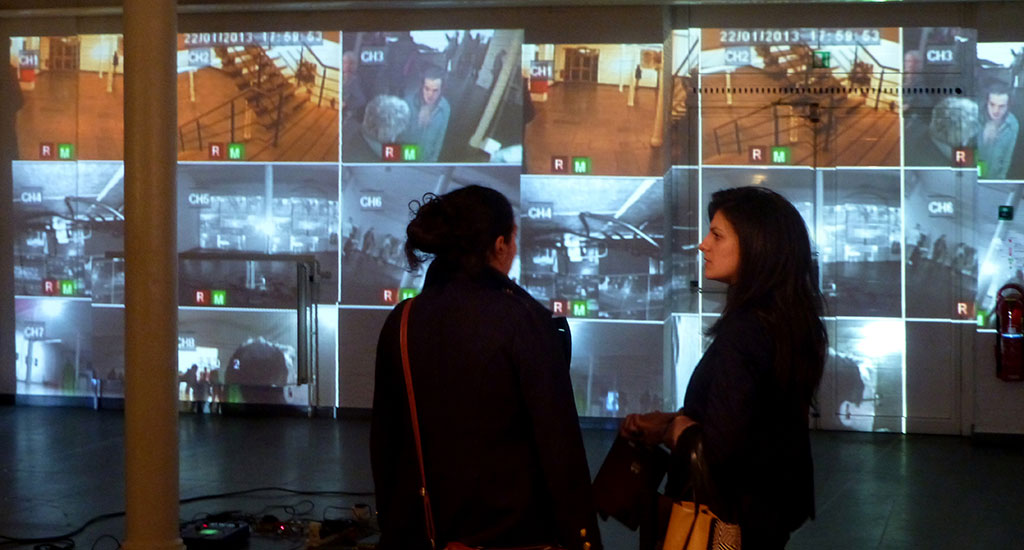
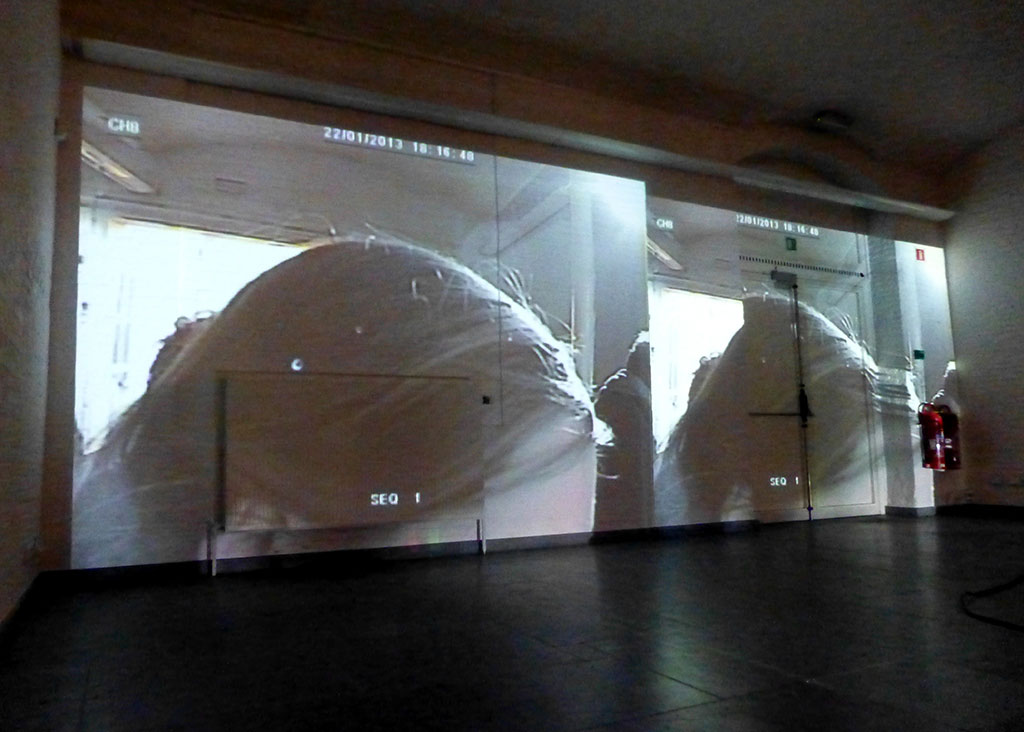
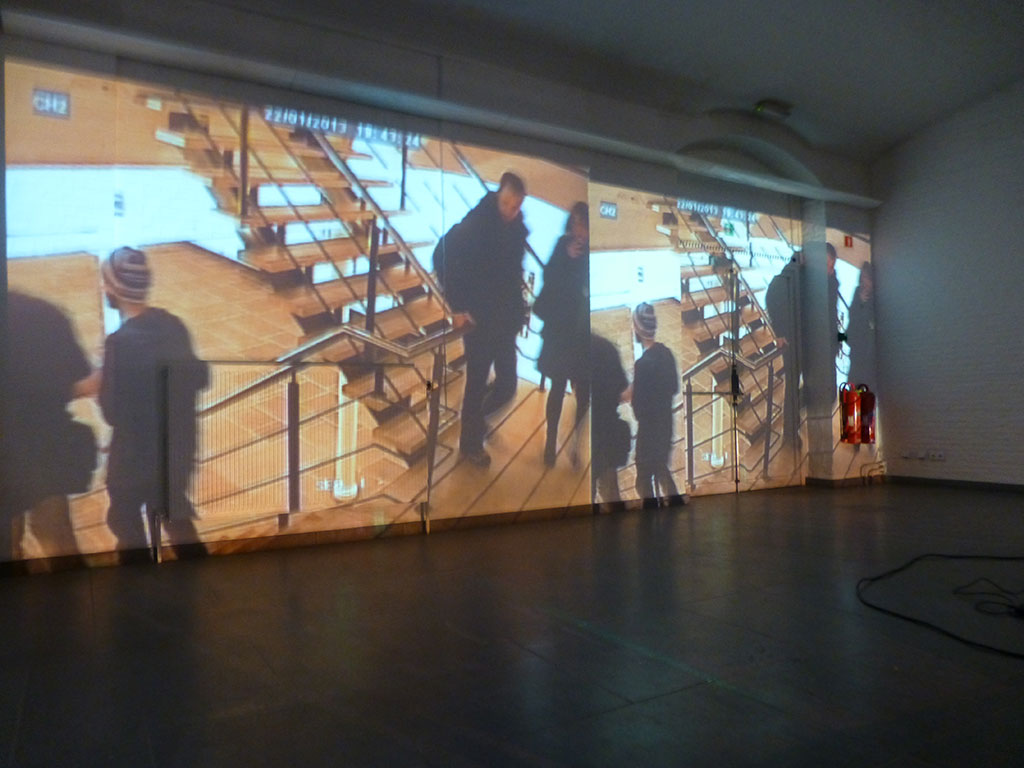
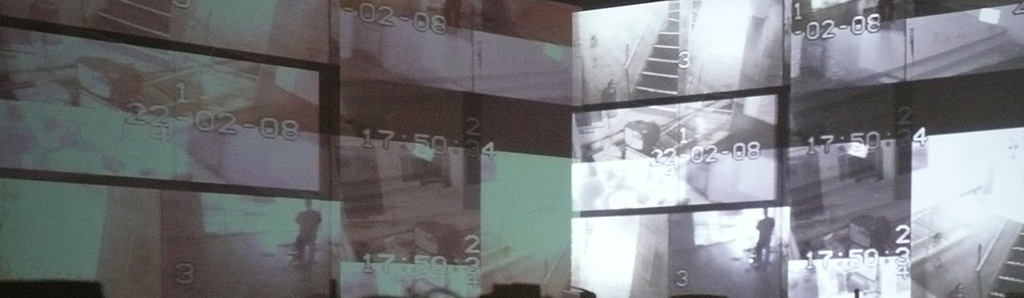
The custom system shows the split screens which is activated when people stand right next to one of the sensors, A photo inside the artwork being projected at "A Look Inside". Surveillance Art expo De Markten: Brussels Belgium 2013
|