|
|
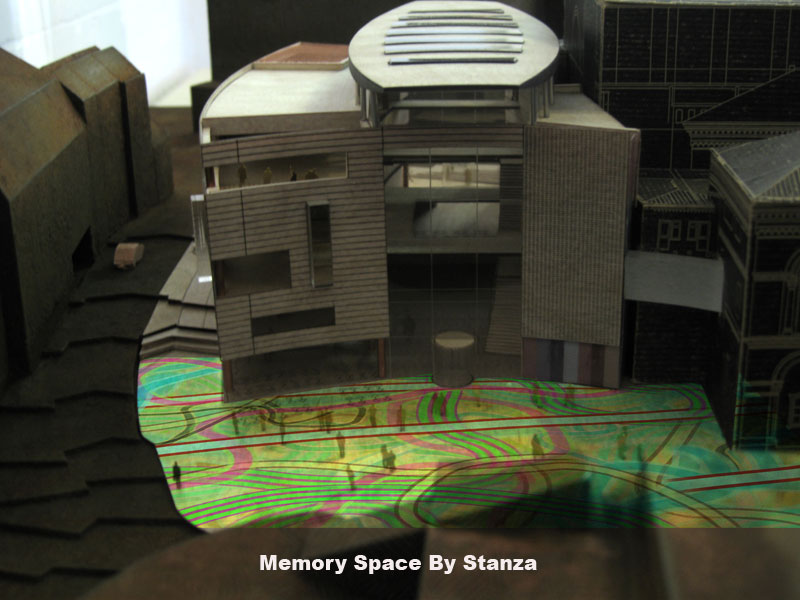
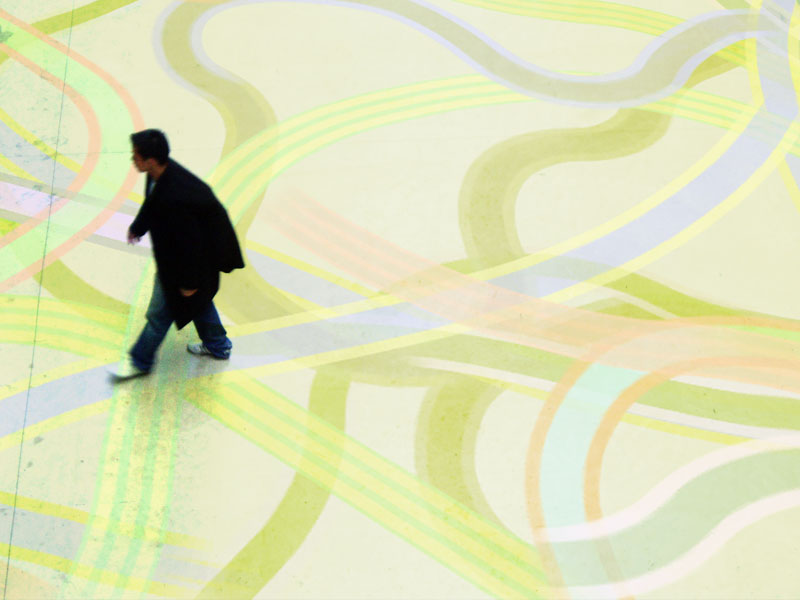
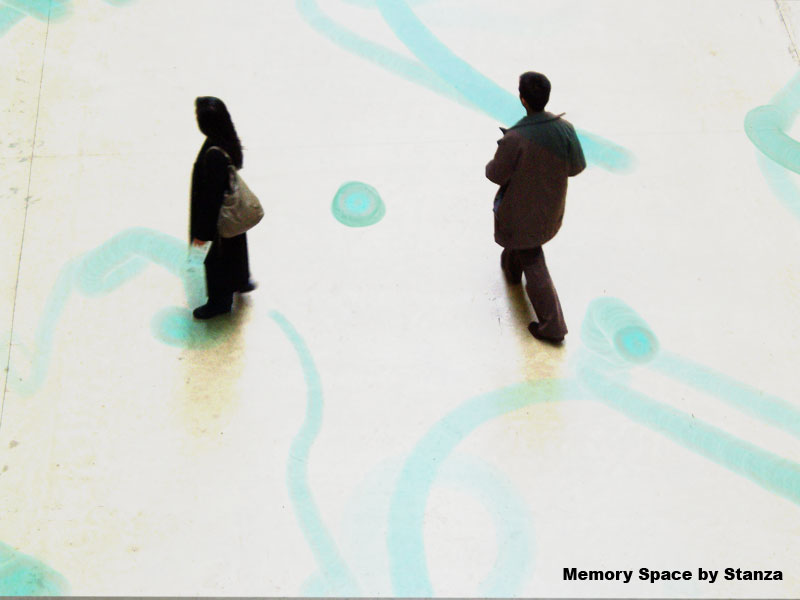
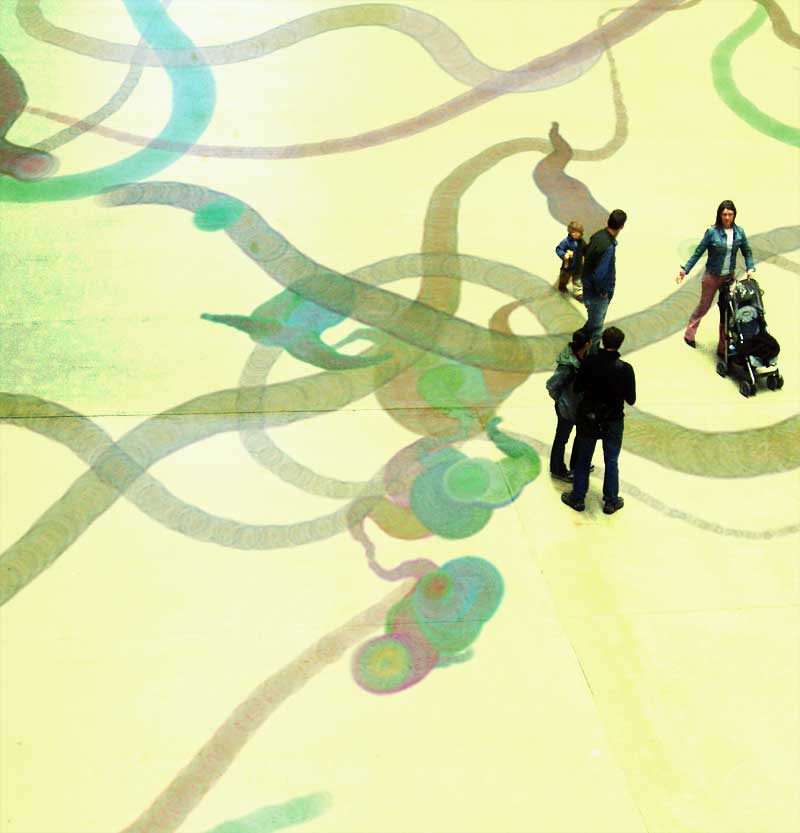
Title "Memory Space.Its Ours and We Want It Back" The patterns, movement, and exchanges of data in the real space using CCTV tracking systems to monitor the space, track public interactions. Software version 1 by Stanza 2005. Experience
Context The artwork explores new ways of thinking about interaction within public space using data gathered from new technologies. This artwork investigates the real time space and the experience of the visitor as they interact with spaces and with each other. The objective is to explore new ways of thinking about interaction within public space and how this affects the socialization of space. While questions of public participation, public space and public technologies are well known discourses in the development of wireless, mobile and context-aware technologies, little systematic attention has actually been given to what constitutes the public who are visitors to the gallery. New technologies sensors and CCTV tracking systems and facial recognition systems monitor the space, track public interactions, and provide “interpretative” responses via the clusters of visitors within large spaces.. The visitors to the gallery or space become assets. In this artwotk, they are referred to as data. Visitors are units of data, moving around the giant database. This artwork tracks an audiences experience of an event and space and shows: what they do, how they interact, and how much they spend time inside the space. Additionally questions are rasied by this artwork.
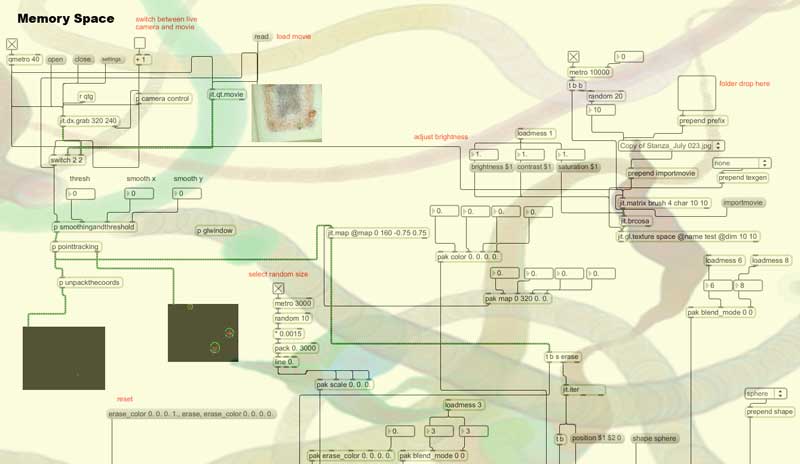
Technology. Version one. Screenshots director using Uni Brain fire I camera. Social software tools for a new critcal space. Funding needed for the next version. Contact me if you are able to support this.
|
|
Software version two prototype
“Its ours and we want it back”. Critically and socially engaged practise and the ethics of public domain space
(C) Stanza 2005
email: stanza at sublime.net |