Soul by stanza....2004 -06. A series of artworks based on visualizing the environment.


made by stanza...redirects to stanza main home page.

'SOUL' BY STANZA

Soul is an artwork viewable to a local audience visualizing real time aspects of the city space. The results of the installation are also viewable to a global audience as an online networked generative experience. Soul is an artwork created to represent the 'soul' of the city of that captures live data and visualizes the results as a piece of sculpture in a constantly evolving data sculpture. To be presented on a unique display technology, this is a 3 meter globe. Soul is a site specific work placed in urban space.

Real time images will be fed into a software system where a series of specialized channels rework these images to create unique visuals. The channels are always on, and always changing, a constant view evolving around the clock. The data is never the same, it is always changing.

The changing light and ephemeral qualities of the city urban landscape are morphed (using CCTV cameras set up in the public domain) to create real time blended collages.

SOUL.


- Soul uses CCTV camera networks and sensors to re-imagine, to re visualize the urban environment.

- The idea is to capture the soul of the city and represent these images/ data as a piece of sculpture in a constantly evolving data sculpture.

-This data sculpture is a live real time evolving or generative artwork. It re-contextualizes the way we experience the city and turn up its head the concept of observation.

- An online interface and navigation system gathers visual data from cameras across the urban space.

- The data is captured and merged into a data visualization representing its 'soul'.

- The output is also made as data display sculpture out of a unique display, to be built.

- The result is a space or installation with unique patterns and output to the displays and online.

- A software system for capturing images from CCTV live in real time.

-The images are taken and then manipulated as idealized landscape.

-The sculpture will utilize specialized materials and display technologies that will have to be adapted to create this work.

-Soul is a public sculpture embedded with the emotional charge of city experience.


Soul  Stanza

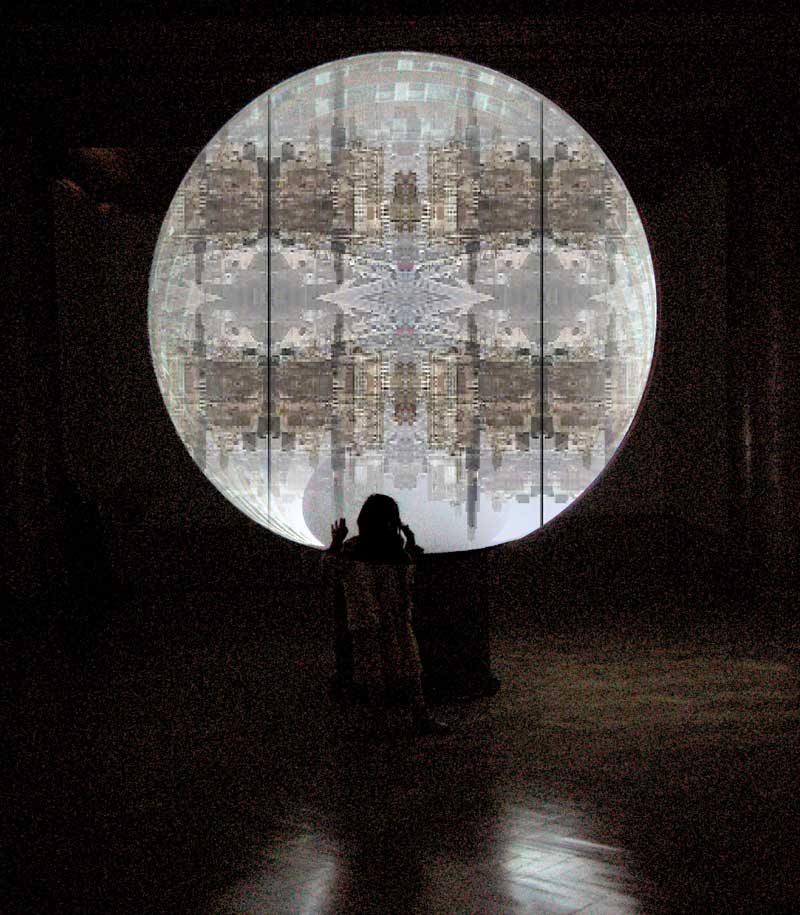
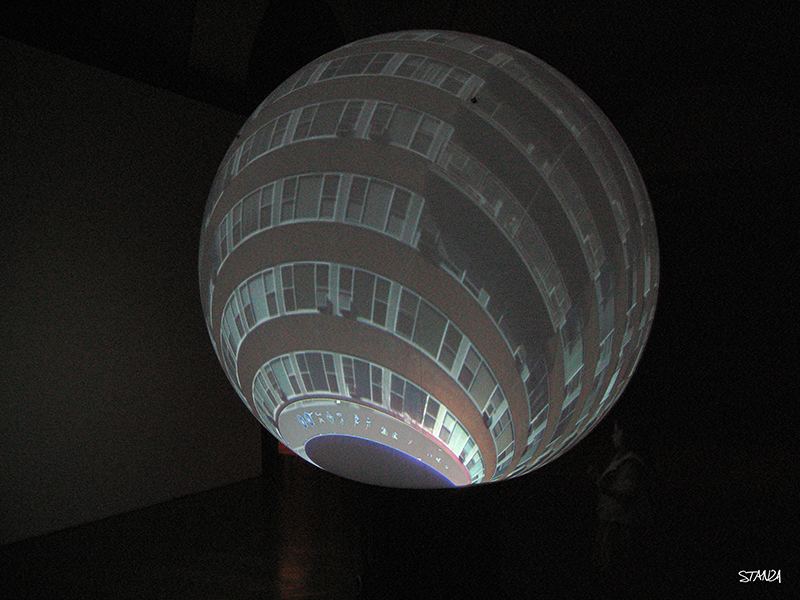
-Soul: test images on the globe display system (sept 2006 County Hall London with Puffersfish)


Sites

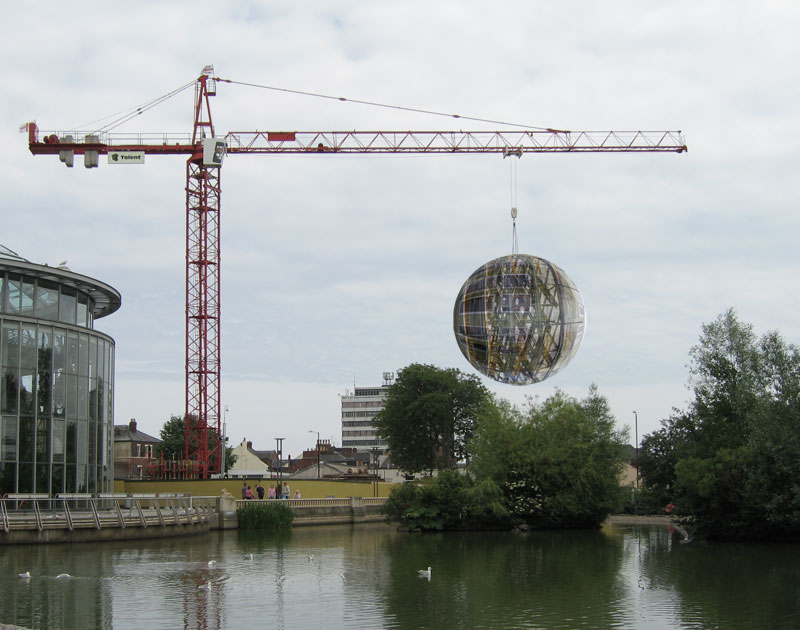
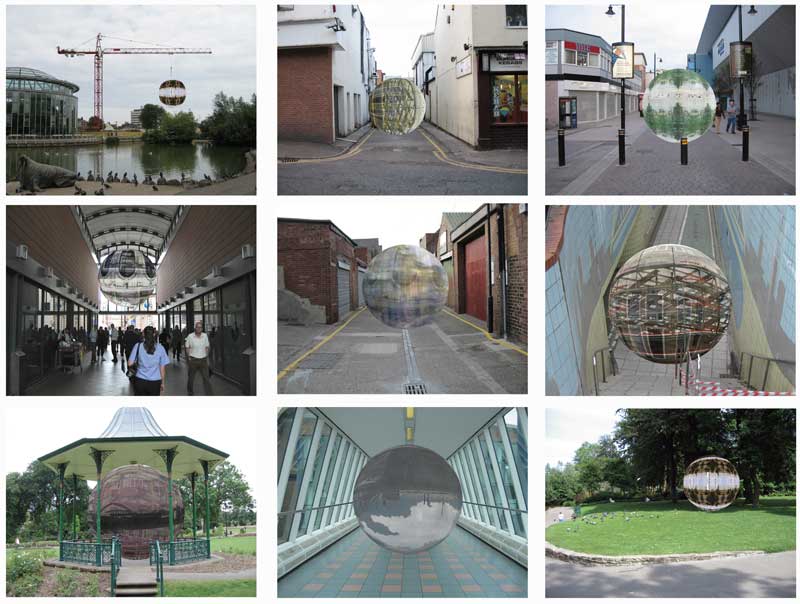
This is what it might look like around a city.


soul

Amber Stanza touching the globe. 2006 Image copyright Stanza This image cannot be used without permission.


Concepts

Making it happen.

The final installation represents real time interactions of the city onto the display. The CCTV cameras will be given to members of the public who will then select views to point the cameras at. The public will be sourced from adverts and from networks of contacts. Once the cameras are set up the images will be transferred to my database. I have written some software and I am working on more that manipulates the images over time. The result can be controlled and viewable online, ie, the installation can be controlled via an online interface.

The software can choose for example one image a second, or choose bits of images over and hour or day..each image created online by any one in the world will make a finished picture over time using the lighting condition from the cameras, and will also be viewable online. These images will all be stored and then used to be presented onto the globe. The images will be channeled into my other online software that can be displayed onto the installation in the real space.

There is an interesting experience is in the unique way the public user and online interface can be bought together across networks to engage and create a cultural artifact ie, the output to the globe 'Soul'.

The metaphor is the search for the soul, and in this case one could also describe the process as painting with camera, ie, using the cameras to take semblances of images which add to this visualization.


What does it mean?

As technologies evolve so must the way in which we disseminate them. This stretches the digital arts to also evolve at an equal pace, while also raising the deeper issues which ride beneath the wave of our data driven existence. Through my research I explore another dimension, investigating directly and in real time the dynamic of the social space. The artworks relate to current data flows in the environments I monitor. My research utilizes systems that can be used to gather information via sensors or CCTV cameras in the field. This data is harnessed to visualize the urban environments and spatial representations as a dynamic real time experience rather than as a recorded 'photograph' of the city space.

I am attempting to move on towards a point where the landscape is a hybridized audio visual representation of the space. ie, an audio visual experience based on the sounds and sights of the city pollution, noise, traffic data , that are captured via these sensor networks.

How we understand and value information is of great importance. It seems reasonable to suggest that visual metaphors might simplify our understanding of data in space. By adopting visual and poetic metaphors for gathered data this enables a perspective which Masayuki Fujihata calls a 'parallel reality', a multi point perspective. (Reference: In conversation with Stanza in Tokyo November 2003 as part of his presentation). He achieved this by using multiple participants walking with field devices and recording the outdoor spaces. His result can be compared to a film of an event, a history.

I want to make my work eternally current. It will allow a real time multiple perspective of an identified space.

In terms of artworks online I would actually cite my own work as being a leading exponent in audio visual interfaces. I have made a number works that address issues of real time data and what I call the emergent properties of city space. (see.www.stanza.co.uk). This new work involves embedding data in real time so that the works become dynamic, and I stress again this is much more than a simulation but is a real time experience.


Overview.

The audience.

The audience is online as well as in the real space. This project is not contained by the real space but will expand into the community via the internet. The benefits to the public from this project are many: The project breaks down boundaries between the artist, real space and the public; it enables non-attendees to discover digital art in a more familiar and non-threatening environment; it can improve the environment in which people live; and it can enrich people's lives through raising awareness and appreciation of the arts.

The benefits to the artist are predominately around audience development and finding new ways of communicating and reaching out to local audiences who may not otherwise experience digital art.

This installation seeks to develop the audience for art using new technologies by drawing connections with contemporary practices. This work will be the culmination of four years worth of research and it is something I have wanted to do for a long time.


What does the data represent?

The data represent the lighting conditions of the city space. The time-based image can be collected as an abstract or as a full representation of what the camera is pointing at. This depends on how the online user decides to use the software.

In summary: It represents my work in a real world capacity to an offline real audience and the output is a live public data sculpture

Time flows and light patterns

Depending on how I decide to morph the images from the online users I can create more re-contextualized variance at the output level. In other words there is the possibility to have a series of concurrent time based visuals showing in real time over the week. The nature of this I have not finalized and forms part of the more experimental nature of the way I light to work. To re-phrase I plan to evolve the work and create something suitable as well as something unique that responds and articulates the Shine brief. I can fix this early but I prefer not to, if you see the illustrations they give some examples of what it might look like and identify a flavour of what might me experienced offline.


Use of public integral to the piece

What I want out of the piece. I am exploring process, and want to engage the public in a piece of artwork that responds the identity of the city. I also want to create an object that will stay in the memory as something exciting and visually stimulating ie, the product itself I want to stay strong. There is also another interesting challenge beyond the experience of the artwork as an object. This challenge lies within the public use of data ie, cameras in the public domain and the ownership of this data.

At this stage, I should state that I understand the legal and ethical parameters of uses CCTV. My works is approved by the AHRC and Goldsmiths college ethics committee. In this work I do not intent to use figurative identifiable images or reference of members of the public and as such this complies with the Data Protection act.

Technology

The display.

The artistic process and concept is not reliant on the display; however how things are displayed plays an important part of the impression and overall context of the work. The idea of making a globe has been part of my idea for this work for about four years as is the concepts of placing the live data inside the city space and making something sculptural with it. For this reason I have decided to collaborate with Pufferfish with the output / display.The above images show test of the work on the actual display in an indoors settings at County Hall London Sept 2006.

This is a very costly (over 100k) projector which is being hired for inside the globe which and its being specially made for this project. The display is durable, weatherproof and can also be suspended.

It is untested how the display behaves outside use in very bright sun and the next version will use technology specifically to address this issue. Testing is due to happen from August and into September). The lighting conditions in the park in winter will be sufficiently low (because of the angle of the sun or even cloud cover) for the images to be clear. To aid the clarity of the image in the park one might include a cover to shield the globe under the trees, (which may well be fine in the winter anyway), or to find an indoor venue the arcade or maybe the car park. (Mentioned above) where there will be no problem whatsoever.

The display meets all health and safety standards and a health and safety certificate is currently pending.


Software.

Custom Software is developed in director shockwave and pulls images from the sourced CCTV cameras. The data is collected sorted on a MySql database. Stored images created my online users are referred from a PHP page.

All this is tested and working. There are no issues here.

Online works timescapes, carves light sculpture out of the images based over time


This example above shows the images taken off three cameras (in London) over ten minutes as a test example. Note it can be set to take the full images or build images from one minute fragments over a day.

For online users, there will be an online gallery where they can also see the images they create with the software.

The main software collects these images and then presents them to the display, ie the installation. An algorithm creates movement at the images come in. Time scripts add variance to the way the images load and a series of functions add more creative variability. These functions act to buffer the image to ram hold them in ram and merge images together within shockwave.

How the images get to the screen

The site will require wireless internet. Two horizontal polarized antennas into 54 megabit access points (Buffalo) with directional antennas.

Power. (To the systems)

Mains power.

If this isn't possible then a simple generator which can be bought for about £500 +vat will do it or someone local might hire or loan one.

Risk

Risk Reward Ratios.

I feel the use and engagement of the public to set up cameras and the engagement of public to use my software, to almost paint with light from these cctv images and then represent it back in space, is a fantastic realization of public engagement over networks to create social art . The work pushes the boundaries of current research with public audiences, online audiences and urban displays.

Mostly with this type of work is the will it work aspect that increases the risk factor. I have covered this relation in my own work before, and the technologically must work. There is no room for failure since I dont want to fake it with video backup or pre recorded material. The essence of live space and people painting with the light of the city; this is embedded in the work. I have software structures in place, a database to hold images and various front end technologies to manipulate images. I have also recently developed a new piece of software that allows users to choose bits of images from one or all cameras and make there own lights cape from the city and all the gets stored and saved and the results can be morphed into the final results on the screen.


It you like the idea and want to commission this as a public artwork it can ealso be shown like this below.

Artistic Statement about current research and practise.

I am researching data within cities and how this can be represented, visualized and interpreted. Data from security tracking, traffic, and environmental monitoring can all be interpreted as a medium to make artworks. I seek to investigate new ways of comparing, conceptualizing and then visualizing complex concepts related to the relationship of emergent data and real space in the built environment. Through practice based research, a series of modular experimental artworks will be created to express the possibilities for our data-mediated future.

There are three strands of my working process; these involve collecting the data, visualizing the data, and then displaying the data. The outputs from the online interfaces and online visualizations can be realized as real time dynamic artworks as diverse as installations, and real objects, made out of new display materials back in physical space.

In all my work I try to exploit the changing dynamics of city life as a source for creativity and create meaningful artistic metaphors. I utilize new technologies and integrate new media artworks into the public domain as part of this ongoing research into the visualization of cityspace. In essence I am researching data as a medium for creativity and how meaningful experiences of our cities may result.

I was a NESTA Dreamtime Fellow from February 2004/5. During that time, I focused on new technologies and their relationship to urban space. As a consequence, for this Fellowship in the Creative and Performing Arts with AHRC, I now aim to research new technologies, sensors, motes, display technologies and interactive architectures. The proposal, 'The Emergent City' incorporates investigations into movements of people, the pollution in the air, the vibrations and sounds of city spaces. The archives of this data will be controlled via bespoke online interfaces that can re-form and re-contextualize experiences in real time, to make emergent artworks.

By investigating these data structures I aim to create new metaphors relevant to the experience of the city. The patterns we make, the visual and imaginative interpretations we give to real world events, are already being networked into retrievable data structures that can be re-imagined and sourced for information. These patterns disclose new ways of seeing the world. The value of gathering and re-presenting this data in artistic form, and then analyzing its impact and influence, lies in making meaning accessible to a wider audience.

Instead of adopting narrative threads from other media, I am interested in the currency that exists already in the city space. I am focused on the wider picture of city experiences which are being played out in real time. This sort of experience of multi nodes, and multi threaded spaces, demands a refined gathering of data, a sensitive accumulation which can then lead to some kind of modeling and visualization. [audible and visual (mis)-representation] of the social network as it exists and is impacted upon.

In summary, I would sum up my aim as the intention of creating a visual art work informed by critical analysis of data-cities.


© stanza. 2004 -6 .www.stanza.co.uk

Funding

This work is ready for exhibition and display. Please email me you are interested.

I need funding for the realization of the display and logistics of this installation.

Credits.

This is a Stanza project under the Global Title of projects:- 'The Emergent City.'

Funding from 2006 - 2009 is supported by The AHRC Creative Fellowship for research:I am fellow at The Goldsmiths Digital Studios, London.

The project needs funding for production and display, user testing evaluation etc.


- other related work below -www.stanza.co.uk

made by stanza...redirects to stanza main home page.