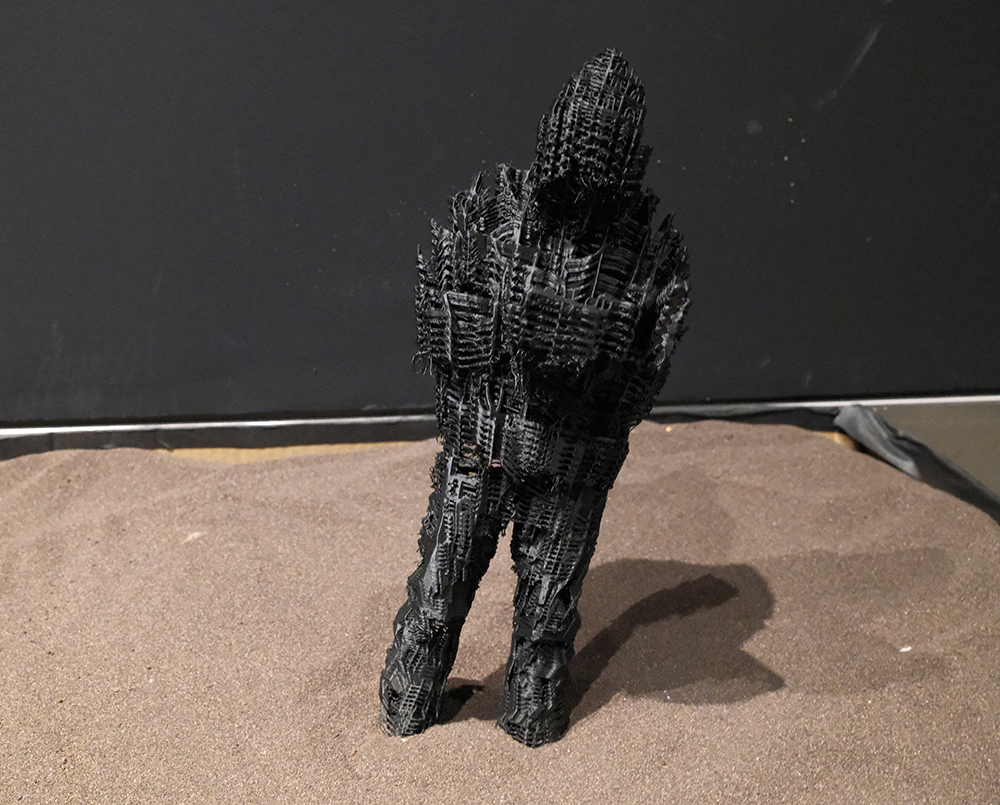
KHOROUJ AL_ROUH : Crossing Over - Shadows and Dust (Here is the small maquette)
A sculptural installation that captures a man, absorbed in the act of reading. Rising from a bed of sand, the figure appears partially formed—his body composed of stratified layers that suggest erosion, excavation, or digital rendering in progress. As the viewer circles the sculpture, the surface gives way to an interior anatomy of absences and interruptions, revealing the figure as a being continuously unearthed. Each layer feels like a slice of memory, consciousness, or data—his soul, quite literally, being excavated.
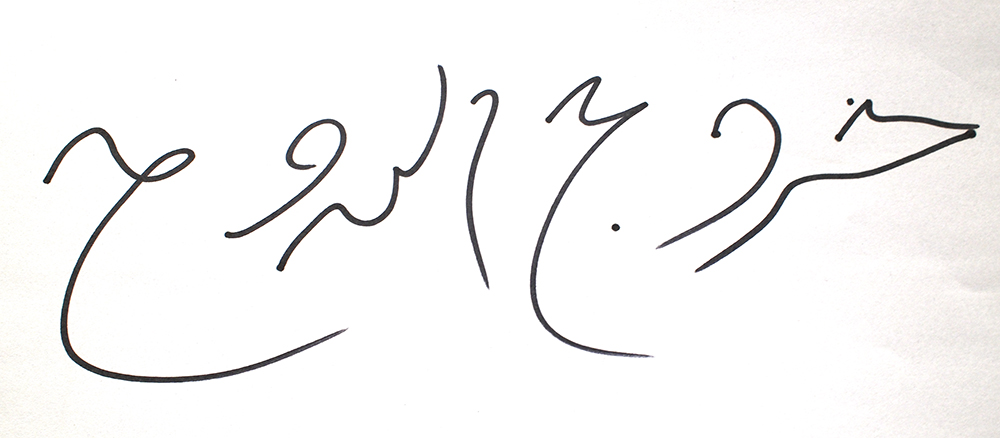
"KHOROUJ AL-ROUH" (خروج الروح) in English translates to "the departure of the soul" or "the exit of the soul."Used in spiritual, poetic, or religious context to refer to the moment of death — when the soul leaves the body. The phrase carries deep emotional and metaphysical weight in Arabic literature and Islamic thought.
Buried in sand and, a symbol of both time and burial, forms the ground from which the man emerges—a reference to the archaeological past, to forgotten knowledge, to the buried self. Yet the stratified construction evokes the digital present: glitched scans, 3D renderings, and fragmented identity in the era of infinite data. The sculpture becomes a metaphor for the modern condition—where inner life is not hidden, but revealed and mined by unseen systems.
In the digital age, the soul itself is no longer a private terrain. It is externalized, translated into algorithms, feeds, and histories that we neither fully control nor fully understand. The man reading, an archetype of deep reflection, now appears fragile—his concentration disrupted by the very medium of his existence. He is being remembered and erased simultaneously, layered with meaning and decay.
KHOROUJ AL_ROUH asks : What remains of the self when even thought is a transaction? And in a time when everything is archived, scraped, and shared, is the soul something we still carry within—or something endlessly extracted?
The work questions whether the soul remains an interior space or has become a mined resource, subject to surveillance, storage, and perpetual reinterpretation in an age where thought itself leaves a digital trace. This sculpture contemplates the slow departure of analogue knowledge in a culture drifting toward screen‑based immediacy. The reader is frozen at the hinge between eras—rooted in the tactile ritual of turning pages, even as the material world that sustains that ritual dematerialises around him.
بالطبع، إليك النص مترجمًا إلى العربية بصيغة أدبية وراقية، مناسبة للعرض في معرض فني أو في بيان تثبيت فني داخل المملكة العربية السعودية أو السياق الخليجي:
"بين الأرض والسماء"
نص العمل الفني
اثنتا عشرة امرأة تقفن في صمتٍ متّزن — أذرعهن ممدودة، وكل يد تشير بإصبع واحدة نحو السماء.
في هذا المشهد الجماعي، تتكوّن ترنيمة بلا صوت. الإيماءة ليست شعيرة دينية، بل دافع داخلي. كل واحدة منهن ترفع إصبعيها كما لو كانت تخاطب السماء — دعاءٌ مشترك، نفسٌ متّصل بين الأرض والسماء.
التكرار في الوقفة لا يُفقدها فرديتها، بل يعمّقها. بين كل جسد وآخر، فراغات من تأمل وسكون. الحركة نفسها توحي بالانقياد والقوة، بالخضوع والبيان. لا يقلّدن طقسًا، بل يجسّدن شيئًا أعمق — ربما ذاكرة روحية أقدم، أو لغة بصرية جديدة لم تولد بعد.
في هذه الإيماءة الجماعية، تُكسر حواجز الصمت. تسأل الأجساد معًا:
كيف يبدو الإيمان حين يُجسّد لا حين يُملى؟
ماذا يحدث حين تُنتزع المساحة الروحية، لا تُمنح؟
هل يمكن للإيماءة أن تكون مقاومة؟ أم توقير؟ أم كليهما؟
هؤلاء النسوة لسْنَ رموزًا مقدسة، بل مفترقات طرق — بين الذات والمقدّس، بين الحضور والتغييب، بين التقليد والتحوّل. يقفن معًا ليصنعن مساحة. لبعضهن، ولما لم يُقال بعد، ولِما لا يزال يسعى إلى الصعود.
هل ترغبين في نسخة مختصرة للنص الجداري؟ أو ترجمة باللهجة الخليجية إن كان ذلك يهم جمهورًا محليًا أكثر؟
Can be exhbited like this ie small scale while the large version still has to be made.
Supported by DAF Diriyah Arts Futures Riyadh. While artist in Residence. 2025

|