Future
Some blue skies thinking and approaches to this.
What sort of things my be of use that have come out of the research labs and is any of this of use now?
Below is what is out there now and the areas that will be of most use in th future.
1. Sensors on body. Accelerometers, gryos,and bio feedback give data that be turned into sounds or visuals.
A number of systems have been developed over the years for dancers. Now with cheaper electronics much more is possible. A sensory resonse system using arduino, sensors and bio feedback could be made, and a custom made tool kit could be developed as a performative kit that would aid interactive experience and create outputs of sounds and visual on any movement.
For Bio feedback.
2 Eye tracking/
There are now many solutiions ie, Tobii Technology which specializes in eye tracking. This technology makes it possible for computers to know exactly where users are looking. Modern day eye tracking is used in homes, schools, and businesses where it is used for interacting with computers as well as with friends and family.The main challenges of eye tracking are not only in developing the right algorithms and sensor solutions, which are a prerequisite for a high level of accuracy, but also in the way users interact with a specific eye tracking device. Eye trackers should be able to perform with all types of eyes and account for such things as glasses, contact lenses, head movement and light conditions. Users should also be able to save personal settings and even look away from the eye tracker without needing to recalibrate.The crude, complex, and highly intrusive eye tracking techniques of the past have been replaced by refined and user-friendly methods that are producing valuable results today and paving the way for the future. On this page are a series of product tha could warrant further investigation. http://www.tobii.com/assistive_technology/products/product_overview.aspx
3. Brain scanning.
http://www.gizmag.com/toyota-wheelchair-powered-brain-waves/12121/
Brain controlled wheelchairs have started to come out of ther resrach labs see above link.
Why brain waves are difficult to work with. Previous attempts all around the world to use brain waves to control devices have only been partially successful. One of the biggest problems with EEG signals is that on the surface of the skull they are in the order of micro-volts (millionth of a volt) and prone to electrical noise. Another problem is that reliable and repeatable placement of EEG electrodes on specific areas above the brain is hard to achieve. Electrodes are typically held in place using caps or other harnesses. Any movement by the patient is bound to create noise and artifacts that are hard to eliminate. Finally, the EEG waves themselves are difficult to interpret. Each signal is a composite of the electrical activity of billions of brain cells working in unison. So while the brain waves are certainly a result of the activity of the brain and its thought processes, the signals are so complicated that we still don’t fully understand them. Plans are underway to utilize this technology in a wide range of applications centered on medicine, rehabilitation and nursing care management. R&D under consideration includes increasing the number of commands given and developing more efficient dry electrodes.
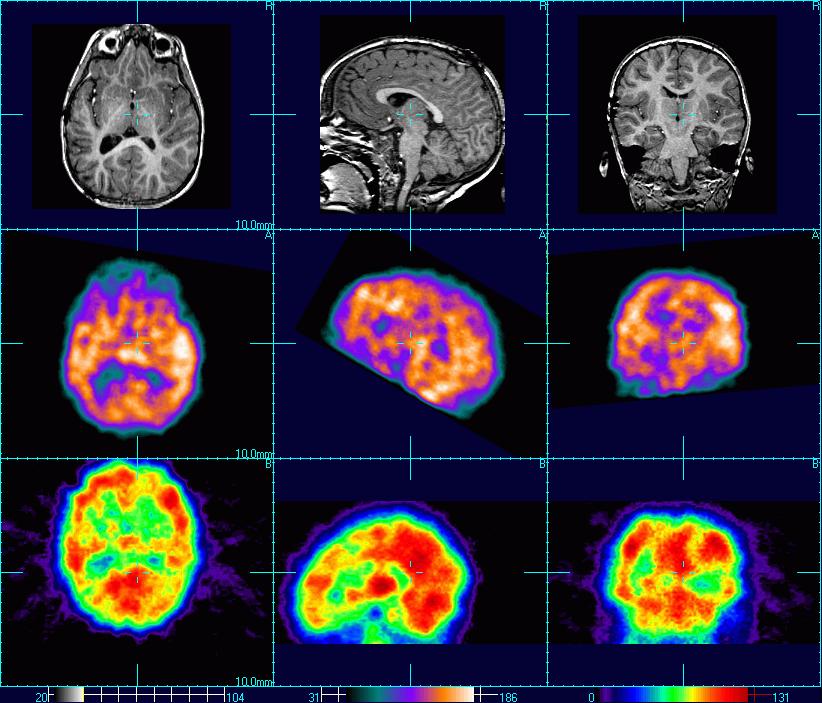
Image taken off google image
So far the research has centered on brain waves related to imaginary hand and foot control. However, through further measurement and analysis it is anticipated that this system may be applied to other types of brain waves generated by various mental states and emotions.
One day your brain will interact directly with a computer using a brain-computer interface.
http://www.bio-medical.com/news_display.cfm?mode=MUL&newsid=75
Simply put what separates us is thedamage to the brain is this the correct way to asses this situation.
http://www.slate.com/id/2099411/
Functional Magnetic Resonance Imaging. fMRI is the holy grail of brain imaging. Traditional MRI scans let you see three-dimensional portraits of brain anatomy, but fMRI goes further: It gives you amazingly precise images of which groups of neurons are firing at any given time inside your head—which areas are furiously working and which are slacking off. fMRI machines use powerful magnets and complex mathematical analysis to detect subtle changes in blood flow to specific parts of the brain, ultimately representing brain activity in color-coded images that look something like Doppler weather reports. You'll need an expert to interpret these images, unless you're harboring a grad degree in neuroscience.
MRI
(from web) "Although the experience of having your fMRI images interpreted is truly amazing—the fear centers of your brain light up when you think a disturbing thought, and your language centers kick into gear as you read a sentence—the scanning process itself is extremely uncomfortable. You have to remain completely motionless inside a tiny tube for up to an hour. The machine itself makes an excruciating noise that sounds as if a truck is backing up in your brain. The hitch with fMRI technology is that you're not likely to install one in the basement: They retail for a couple million dollars. Your best bet is probably to sign up as a test subject at your local university and then plead with the researchers for some special snapshots of your brain to show the folks back home. The benefits of an fMRI scan depend on the experiment, and the results are closer to clues and hunches than Empirical Scientific Facts. But they can be tantalizing. When I spent time in the scanner, we looked at my brain doing a number of language-related tasks: reading other people's text, reading passages from my own book, and then composing actual sentences. What we found was that the moments where I was the most focused on writing were also the moments where there was the least activity in my brain. (For instance, even though my eyes were open, there was far less activity in the areas that process visual information.)
Brain balance and harmony is the first step to well being and optimization. Balance in the brain, is subsequently followed by balance in the body. The condition of balance and harmony for the brain is known as homeostasis. It is a “level playing field” for your brain to respond to thinking, feeling, and healing your body in an optimized state. Your brain acts as the hub of the wheel, your nervous system the spokes and your body the rim. When the hub is out of balance everything else suffers.
Brainwave Optimization with RTB™ is a completely non-invasive, individually tailored process of balancing and harmonizing the brain. The System balances brain activity from the lobes of one side of the brain to the other, and from the front of the brain to the back. Harmony refers to the way energy patterns function together from low to high in the various regions of the brain. The sole objective of brainwave optimization is to establish balance and harmony in the brain.
3. Brainwave Optimization with RTB – is based on brain observance. It is based on a Quantum Physics vs.a Newtonian Physics understanding of the individual, and this philosophical difference cannot be too heavily stressed. Brainwave Optimization with RTB seeks to show the brain itself – be a mirror for the brain in its ever more optimized state. The client is not trained with learned behavior. In fact, while not optimal, a client may sleep through a session and still realize results because the brain can view itself without direct client participation. Though it is always more efficacious to have the client participate, it is not mandatory.
For example, clients adversarial to the training, such as those with adolescent misbehavior or antisocial behavior issues, can still be assisted to balance and harmonize their brain and achieve a greater homeostasis.
http://www.brainstatetech.com/?gclid=CP2cubLGvZ8CFRxk4wod_nfizQ
http://learn.genetics.utah.edu/content/addiction/drugs/brainimage.html
MRI also differs from PET in that the energy pulse detected by the computer is in the form of radio waves rather than gamma rays. (A PET scanner detects gamma rays that are produced when positrons from the radioactive tracer collide with electrons in the brain.)
Can I get my brain scanned….or 3 d and any data for me…..comapre my brain similate responses…what being done in bain scicnwe in this field…
Modern brain imaging techniques like PET and MRI (Magnetic Resonance Imaging) are becoming indispensible to researchers studying addiction and its effects on the brain. That is because addiction research requires looking inside the brain at areas where both drugs and natural chemicals act. Researchers can now determine how quickly drugs reach receptors in the brain and how long they stay there. Or, view changes in brain activity after long-term drug use, during craving or withdrawal, or following various treatments
for drug abuse and addiction.
Biofeedback can help you recognize mind/body responses that you didn't know you had, and teach you how to change the ones you know about but can't control. Biofeedback works by letting you see, hear, or feel something that the sensors from a device have monitored from your body or mind. What's monitored can be experienced through anything from an interactive video game, to a line chart. There are devices with sensors to monitor anything from the muscle tension of your left index finger, to the brainwaves of a specific location in your brain. Biofeedback is a popular form of complementary and alternative medicine, but is also very beneficial for people who aren't looking to cure a specific disease or condition. It can help you improve your health and sense of well-being.
The Light & Sound Mind Machines can change your mind state by affecting your brainwaves.These changes result from a universal and easy to understand scientific principle called entrainment. The entrainment principle is simply the tendency for two oscillating bodies to lock into phase. Entrainment happens when the vibrations from two or more rhythm cycles stimulate each other into a synchronization - they harmonize. This is called brainwave entrainment or the 'frequency following response' when it is used to change brainwaves.
The brain is constantly being stimulated, and our neurons ceaselessly fire off and on for as long as we live. This firing is the brain responding to stimulation. Neurons can sometimes even fire in rhythms that respond to the beat of music being listened to.
If the brain has been responding to the continous stimulation of a frequency for around 5-6 minutes, it begins to generate the same rhythm on its own.
http://www.mindmodulations.com/products.html?gclid=CPyripzGvZ8CFQ1f4woddlRj0g
The Procyon Light and Sound Mind Machine - Audio Visual Synthesizer by MindPlace
Price: $269.00 –
Imagine a world of pure, jewel-like color illuminating both visual and mental fields. From a single hue indefinitely sustained to a slow morph, brighter then dimmer, fading from deep blue to aqua, then transitioning through a rainbow of precisely sequenced hues and shades.
Such colors can profoundly affect consciousness and mood. Blues and greens instill a meditative spirit of tranquility, golden light elicits focused awareness, and crimson, total alertness.
Flickering light can also affect and alter mental state in often dramatic ways, eliciting the "entrainment effect", dwelling at the threshold of sleep, or activating visual creativity. If you are new to this technology, you can learn more about it here.
The Procyon includes 50 unique, pre-programmed light and sound stimulations sequences (called sessions or programs) with its internal memory, each designed with a specific goal in mind. All sessions were designed to support the mental processes required to integrate the lessons of daily life and we believe you will help make your inner travels more productive.
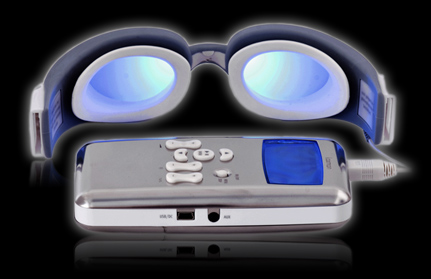
Tranquility and calming: These sessions use mostly "calming" colors, especially blue and green, but also shades of purple and occasionally other colors for visual variety. They tend to change slowly and are intended to lead the mind towards a state of tranquility.
Before bed: Similar to the calming sessions, but even slower and again focused on blue and green light and their combinations. The goal is to help clear the mind before bed. Some users have reported having unusually vivid dreams with these sessions.
Learning: Most of these are based upon the twilight learning and super-learning paradigm, and are intended to lead your mind into a light trance-like state known as hypnogogia.
For this price this is worth buying one...
This one reacted to pulsing sounds..
The Sirius from MindPlace is the best value in light/sound mind machines available today. The frequencies used in the Sirius sessions mimic those found in brainwaves during activities like meditation, dreaming, and deeply focused concentration. You experience and feel these states as your brainwaves synchronize to the lights and sound. Your brain begins producing more theta and alpha waves, and less beta waves - what we have during 'busy and scattered thinking' throughout the day.
Cost 99 us
LAXMAN…649 us dollars
Each Laxman light and sound mind machine order includes the Laxman device with LCD display and top quality steel casing, all-color eyes-open ganzfeld goggles, soft carrying case, high quality comfortable earbud headphones, handbook/instruction manual, microfiber cleaning cloth, batteries, USB cable, and support disc.
The Laxman works on long known, simple, natural principles. The Laxman works by using well known physiological mechanisms known as the "frequency following response", or the "entrainment process".
Visual and auditory stimuli vibrating at specific frequencies directly effect our brain wave patterns from the outside - as can be seen in EEG tests.
The Laxman is backed by a history of studies on the efficacy of the entrainment process. You can find some of these studies below and elsewhere on our site. The system very effectively creates a state of relaxed clarity and concentration. Furthermore, the receptiveness for study contents is increased significantly.
Learning by Osmosis The Laxman supports the receptiveness and long term memory characteristics of the brain and is very well suited for learning preparation and reinforcement as well as an attendant. Special relaxation programs which promote an increase of the attention are especially suitable for learning preparation. They lead to a promotion of the so-called alpha state and increase the cerebral perfusion. Some contents, e.g. auditive language courses, can be directly uploaded to the device and learned with appropriate sessions. Various contents can be easily integrated and exchanged by a memory card. For learning reinforcement there are also special programs available, which support the retention of learned contents in the long term memory. This takes place by a promotion of the so-called theta state. Thus, the Laxman is especially suitable for training and coaching institutions, as well as in all situations where complex contents have to be learned and memorized within a short time. Find recapitulatory study results concerning the use of audiovisual stimulation for learning in our rubric "studies".
More info http://www.mindmodulations.com/prod-neurotronics-laxman-mind-machine.html
I would recommend one of these even these arent that expensive
Then there is this sort of stuff.
http://www.bio-medical.com/product_info.cfm?inventory__imodel=T7520M
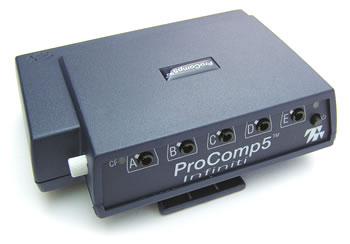
The Thought Technology ProComp Infiniti is an 8 channel, biofeedback and neurofeedback system with the power needed for real-time data acquisition in any clinical or educational setting.. The first two sensor channels of the Infiniti encoder provide ultimate signal fidelity (2048 samples per second) for viewing raw EEG, EMG and EKG signals. The remaining six channels (256 samples/sec) can be used with any combination of sensors, including EEG, EKG, RMS EMG, skin conductance, heart rate, blood volume pulse, respiration, goniometry, force, and voltage input. Approx 6000 us dollars
Conclusion to brain scanning
The area of brain scanning is vast and more stuff will no doubt come out of the labs. Buying a headset to try to build a system to control would be valuable artistic experiment. If our students can make decisions then this kit would potentially allow them to move real physical objects by just thinking. If they can think red then a wireless signal can be send to affect the physical interaction.
4. Location and mapping devices. Gps mapping and locative postioning via hand helds. ….(ethics and privacy issues)
There are a variety of ways locations devices could be adapted and this would vary according to the needs and brief, and because it sis a form of surveillance privacy issues would have to be negotiated.
However an i phone app that pings blue tooth messages to a specified user group would be a usefull app that could be adopted then adapted for a variety of users and uses.
5. Robots….…etc…voice controlled, thought controlled advanced mechantronics.
This is an very intersting video. Normally you see videos of robots doing simple tasks at a slower pace than a human would. However the Ishikawa Komuro lab in Tokyo have developed high speed robots that can throw mobile phones in the air and catch them with their fingers with absolute precision.
What happens if one speculates whwre all this advancement in technology is heading...
.http://blog.futureburo.com/2009/08/lightning-fast-robot-hand/?utm_source=feedburner
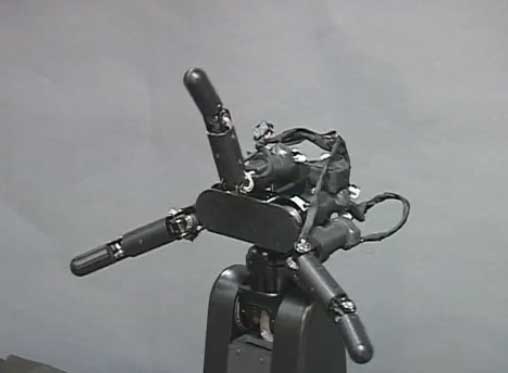
After watching this video I concluded that it must be possible to connect the brain scanner technology to this system or this sort of advanced robotic system. For very handicapped there is a space here that offer all sorts of possiblities and requires more research.
--------------------------------------------------------------------------------------------------------------------------------------------------------
|