Artistic Practice
Dr Stanza is an independent artist based in London who has been exhibiting worldwide since 1982. His work sits at the intersection of art and speculative futures, examining surveillance, invisible agency, and shifting human environments. The artworks expose human complicity within the technological systems of observation and monitoring that shape communication. They fit seamlessly into what he calls 'panoptic aesthetics'. The technologies incorporated in his digital artworks can include, custom-made sensors, networked cameras, robotics, and computers. What becomes real are the art installations, sculptures, websites, software systems, and paintings Stanza exhibits. Stanza's artworks have won twenty international art prizes and art awards including:- Vidalife 6.0 First Prize Spain. SeNef Grand Prix Korea. Videobrasil First Prize Brazil. Cynet Art First Prize Germany. Share First Prize Winner Italy. Video Formes France. Next Nature Prize.
His art has also been rewarded with a prestigious Nesta Dreamtime Award, an Arts Humanities Creative Fellowship a Clarks bursary, and numerous international arts residencies including Dariyah Arts Futures residency, Starts Residency.
His artworks have been exhibited in over one hundred exhibitions globally including- Venice Biennale Italy: Deutsches Museum Germany: Victoria Albert Museum: Tate Britain: Rijksmuseum Twente: HNF Germany: Bruges Museum Belgium: Fundacion Telefonica in Spain: TSSK Norway: Museo Tamayo Arte Contemporáneo Mexico: Plymouth Arts Centre UK: ICA London UK: State Museum, Novosibirsk: Biennale of Sydney: Sao Paulo Biennale: De Markten Brussels: Museum Of Cyptography Moscow: Transport Museum London: Haifa Museum: QUAD Derby UK: FACT Liverpool UK: MAMM Moscow: Ars Nova Museum Finland: York Art Gallery: Salisbury Cathedral: Centre des Arts Les Bain France: Bury Art Museum, UK: Kellen Gallery USA: Samek Art Museum USA: Shrewsbury Museum UK: Samsung Media Centre Korea: Heinz Nixdorf Museum Germany: Järvenpää Art Museum: Multimedia Art Museum Moscow: Quays Culture, Wolverhampton Art Gallery: The Open Data Institute: The Goodwood Festival Of Speed: The Lowry: Mundo Urbano Spain:
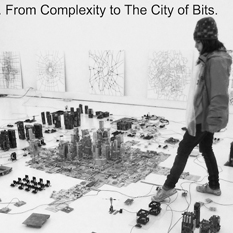
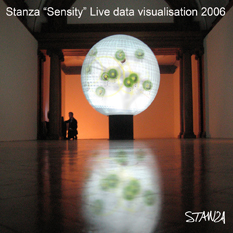
His most recent work connects data streams from ‘Smart Cities’ speculating on ideas for merging various types of real time data using methods of artificial intelligence machine learning to create new artistic scenarios. The thrust of these artworks aims to show what happens when the public is allowed to make their own mixes and visualisations with the data, reclaiming ownership and representing data in new and different ways. Stanza transforms abstract data into dynamic, living artworks. These pieces reflect the complexities of surveillance culture, raising questions about agency, control, and the ethical dimensions of our connected existence. His concept of panoptic aesthetics describes this merging of data systems with visual culture—where technology not only observes but becomes part of the artwork itself. Projects like The Nemesis Machine imagine the city as a self-governing entity, powered by the very data it produces. In this vision, the artwork becomes a responsive ecosystem—an expressive, evolving map of urban behaviour.
Artworks trace an interest in the technological landscape from the linear city- (paintings music video) to the interactive city (software, websites, touch screens), the generative city (installations, software), to the emergent city (installations, sculptures, software), to entangled cities (AI, installation, software, data)
Some of his most well known digital art projects include:-
Stanza was one of the first artists to use the internet as an art medium. His major online internet projects include the Net Art archive with work from 1995, soundcities.com (a global soundmap project 1997-2024), Genomixer.com DNA-based artworks 2000-4), thecentralcity.co.uk (urban and city systems 1996), amorphoscapes.co.uk (generative painting 1997-2007), and soundtoys.net (an online curated art portal 1996 + now offline).
VIDEO CHANNELS.
Entangled Cities Channel. (2017-2026) Including: Entangled Cities, Velocity, Living Systems, Ecocity, Machine Cities.There are 100 videos of data paintings in this series. Available for exhibitions.
Amorphoscapes Channel. (1997-2007) Code based generative digital paintings. They were all made as online interactive systems i.e. net art and some have been editioned as touch screens and made as executable software. There are over 100 videos in the amorphoscapes series.
Net Art Channel: (1995-2009) Videos of artworks specifically made for the internet as generative net art online artworks. These are user-based experiences custom-made softwares and have been exhibited at many museums around the world, from 1995 onwards. There are over fifty videos here.
Panic Noise Videos: (1985-1987) Created using analogue VT technologies and early computer graphics systems including BBC micro, Amiga and Quantel Paintbox. These artworks uses patterns and forms from the city. There are over one hundred videos in this series.
Dr Stanza AKA Steve Tanza (PhD, MA, BA, Cert Ed, PG Dip)
studied art at Goldsmiths College University of London, Greenwich University, Central Saint Martins and University Of Westminster London. Stanza was also an AHRC arts research fellow at Goldsmiths College.

Contact Email: studio@stanza.co.uk
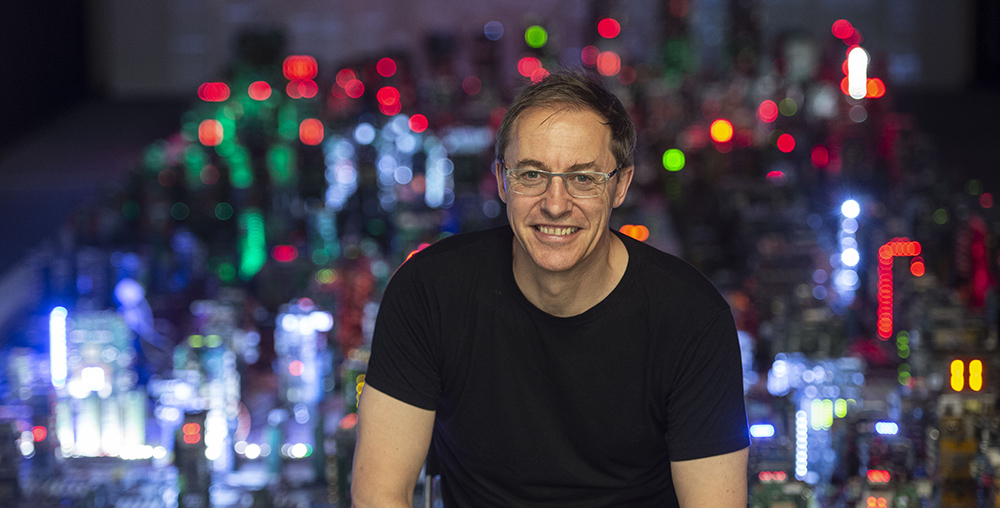
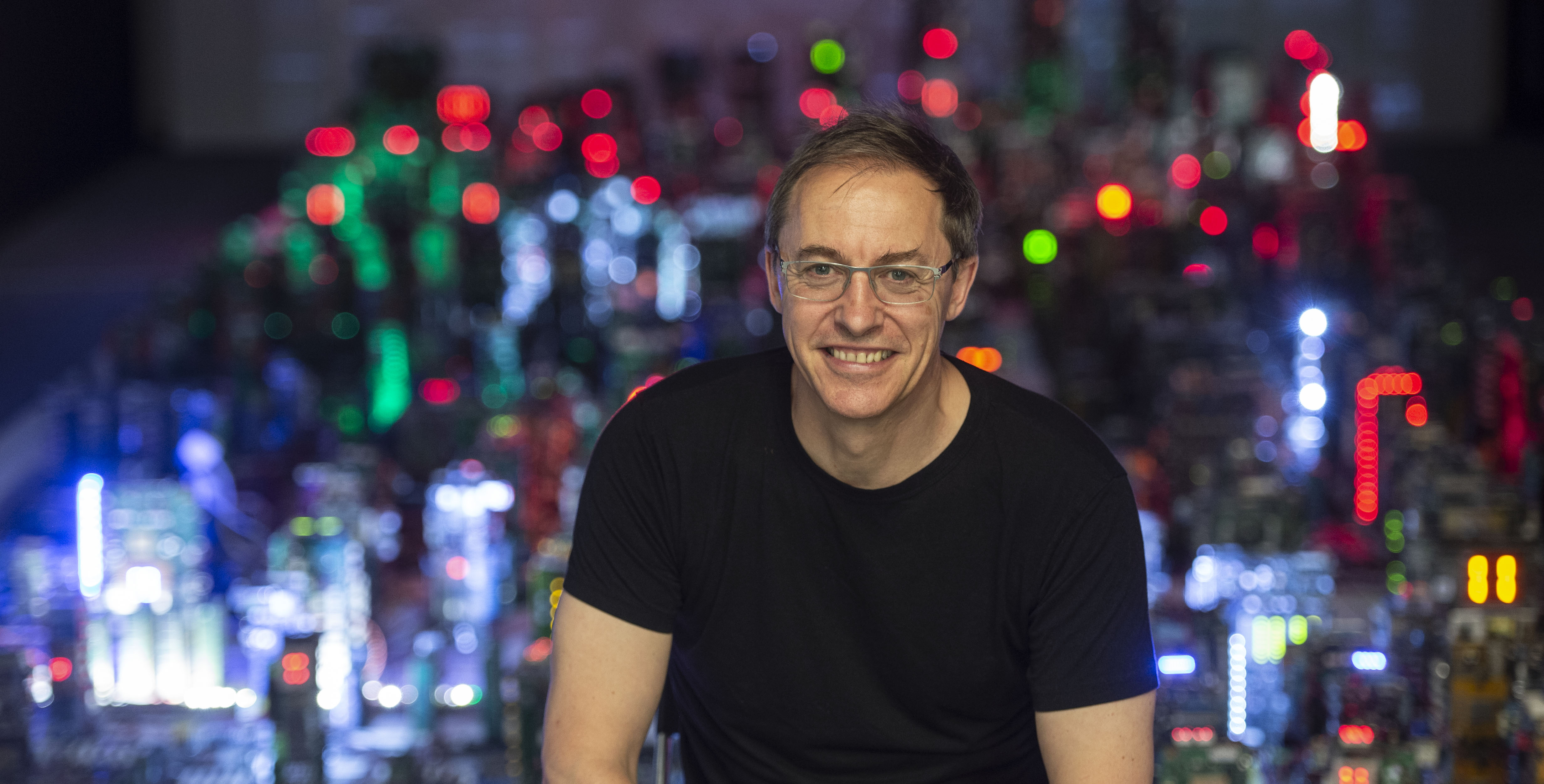
Portrait of the artist Stanza. Hi res here.
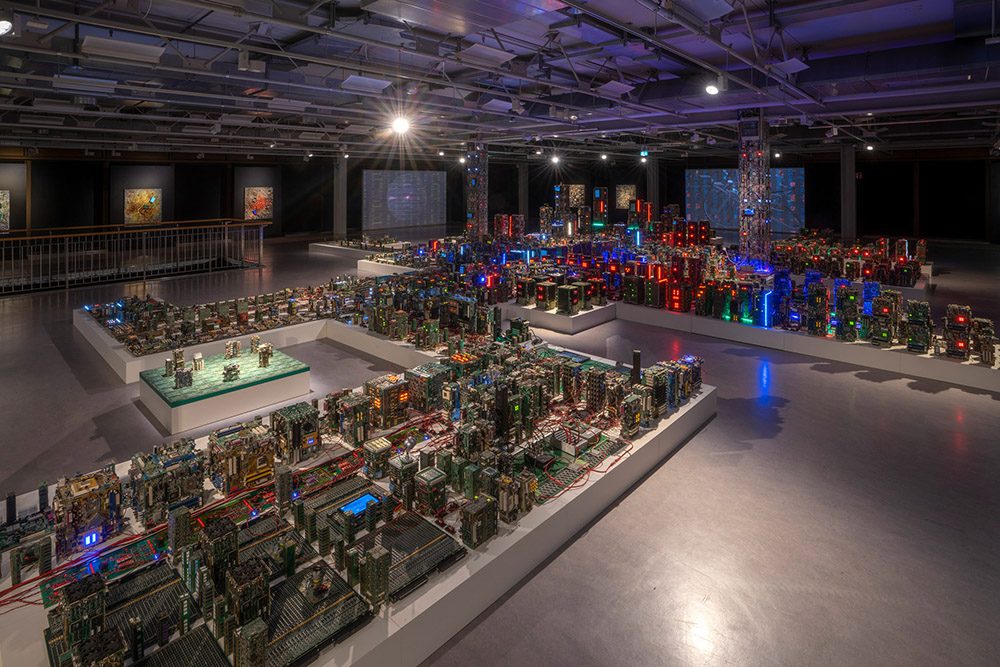
STANZA — Landscape, Technology and the Networked Environment
Stanza is an artist whose practice explores the landscape of contemporary life as it is transformed by technology, data, networks and artificial intelligence. His work considers the city and the wider environment not simply as physical places, but as living, interconnected systems in which people, machines, sensors, infrastructures and data are constantly interacting.
For Stanza, the landscape has become increasingly technological. Beneath the visible streets, buildings, rivers, weather systems and public spaces exists another landscape made from invisible information: environmental sensors, surveillance cameras, transport networks, GPS signals, social media, communications systems and streams of real-time data. His artworks make this hidden landscape visible.
A central concern of the work is the relationship between observation and agency. Stanza explores what happens when the environments in which we live are continuously monitored, measured, recorded and interpreted by machines. His installations, sculptures, paintings, software systems and online artworks transform these invisible processes into experiences that audiences can see, hear and interact with.
This approach is connected to what Stanza describes as “panoptic aesthetics”: an artistic investigation of systems in which observation, data collection and technological control become part of the landscape itself. His work asks us to recognise that we are not simply observers of these systems. We are also participants within them. Our movements, choices, communications and interactions continually produce the data through which these technological environments operate.
The city therefore becomes a kind of living organism. In works such as The Nemesis Machine, multiple streams of environmental and urban information are brought together to create a constantly changing digital ecosystem. Weather, pollution, transport, movement and other forms of real-time information become the materials from which the artwork is constructed. Different “districts” within the work function as interconnected spaces within a larger system, allowing the artwork to behave less like a static object and more like a living technological landscape.
This raises an important question: can technology be used to liberate and empower us, rather than simply monitor and control us?
Stanza's work does not treat technology as a neutral tool. It examines the political, social and ethical consequences of technological systems that increasingly influence how we move through cities and understand the world around us. The work asks whether connected technologies might produce more inclusive, collaborative and shared environments, or whether they will instead create new forms of division, surveillance and control.
Imagine walking outside and knowing that every movement, sound, location, interaction and digital trace could potentially be recorded, stored, analysed and interpreted. This is not a distant science-fiction scenario but an increasingly familiar condition of contemporary life. Stanza's artworks make this condition tangible by turning streams of information into visual, spatial and interactive experiences.
His practice is particularly interested in dataveillance and the emergence of what has been described as liquid surveillance: surveillance that no longer depends on a single camera or identifiable observer, but operates through continuous flows of information across networks. Data moves between sensors, databases, platforms and intelligent systems, creating a constantly changing technological landscape.
Within this landscape, artificial intelligence and machine learning introduce another layer of complexity. Data is no longer simply collected and displayed; it can be interpreted by autonomous systems that identify patterns, make predictions and potentially make decisions. Stanza explores what might happen if these systems begin to operate as independent agents.
Can we create a city that appears to govern itself? Can an artwork develop its own behaviour from the data it receives? Can a machine develop a form of artificial consciousness from the environment surrounding it? And, perhaps most importantly, who is responsible when autonomous systems begin to make decisions?
These questions are central to Stanza's recent research into AI, networked environments and future forms of governance. His artworks become experimental spaces in which these possibilities can be tested. Rather than simply illustrating technological change, the artworks construct functioning systems and ask audiences to experience the consequences of living inside them.
The landscape in Stanza's work is therefore both physical and virtual. It is the landscape of streets, buildings, weather and ecological systems, but also the invisible landscape of algorithms, databases, networks and machine intelligence. These two landscapes are increasingly inseparable.
His work creates a third space between the physical and digital worlds: a shared environment in which real-time information can become an artistic material. Through installations, sculptures, paintings, software and online environments, Stanza transforms data into something experiential, allowing audiences to encounter the otherwise invisible systems that shape contemporary life.
Ultimately, the work asks us to reconsider our relationship with technology and with the environments we inhabit. Are we controlling these systems, or are the systems beginning to control us? Are we becoming more connected, or simply more measurable? And as artificial intelligence becomes increasingly embedded within our cities and landscapes, how will we negotiate questions of agency, responsibility, ownership and freedom?
Stanza's practice explores these questions through art that makes the invisible visible: turning the flows of data that surround us into landscapes we can encounter, question and experience.
How will AI affect the governance of the city of the future and how will this be manifested as artworks an audience can experience?
https://www.stanza.co.uk

All artwork by Stanza, Steve Tanza
|